4
4

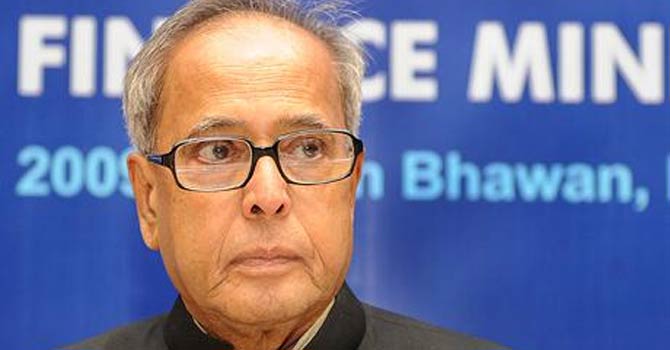
NEW DELHI: India's former finance minister Pranab Mukherjee is set to win presidential elections on Thursday, with some analysts predicting he may wield an unusual degree of influence in the ceremonial role.
The result of the vote by national and state lawmakers will be announced on Sunday, but Mukherjee is the candidate of the ruling Congress party and appears to have won the support of enough smaller parties to ensure his victory.
Mukherjee, 76, will take over as president from Pratibha Patil, a low-profile figure who has maintained a strictly detached stance during her five years in the job.
But with the national parliament often deadlocked by disputes among rival parties and no clear winner expected in the next general election due in 2014, Mukherjee could play a key role in overseeing who forms the next government.
“There is no permanent equation in India's coalition politics and if Mukherjee becomes the president then his art of negotiation will be put to the test,” T K Tripathi, a leading political analyst and author, told AFP.
“He can be the kingmaker in this age of complex coalition politics.”
Until only last month, Mukherjee was at the heart of India's Congress-led government, which has struggled with policy paralysis, rebellious coalition partners and corruption scandals since winning re-election in 2009.
As finance minister, he has taken heavy flak for a sharp decline in the economic growth rate and growing pessimism about India's future after years of rapid development.
Amid such uncertainty, Congress faces a major challenge in keeping enough coalition allies on board to push through much-needed reforms, and the party is already braced for a tough battle to retain power in 2014.
The main opposition Bharatiya Janata Party (BJP) is also unlikely to win a clear majority in the general election, meaning a shaky grouping including several regional parties could try to form the government.
Despite his decades at the top of the Congress party, Mukherjee commands respect from across the political spectrum and his renowned negotiating skills would be valuable after a messy general election result.
“Political ties are changing. Every party is scouting new partners to be able to form the government,” Sanjay Kumar, a political analyst at the Centre for the Study of Developing Societies think-tank in New Delhi, told AFP.
“It is in this turbulent scenario, Mukherjee as a president will be able to steer the ship of the state. He is a trouble-shooter,” Kumar told AFP.
“This (presidential) election process has fractured ties among the coalition partners.”
In a sign of Congress's woes, Mukherjee's candidacy has not been supported by one of the ruling coalition's key partners, the West Bengal-based All India Trinamool Congress.
“He will not be a mere spectator to political developments,” said S B Ray Chaudhury, a political science professor at Rabindra Bharati University in Kolkata told AFP.
“The man has given political direction in the past and will continue to do so but this time he cannot favour any single party. Theoretically, the president is above politics but Mukherjee enjoys the right to be what he chooses to be.”
Under the constitution, the prime minister holds most executive power with the president playing a role if necessary in government formation at state and federal levels.
“I am sure if any president follows his predecessors he will not face difficulty,” Mukherjee said on Sunday.
“I have seen many presidents facing difficulties... but they found the solution within the framework of the constitution.”
The BJP is backing former parliamentary speaker P A Sangma, who represents a tribal constituency in the remote north-east.
Indian presidents are elected by an electoral college comprising MPs from the federal parliament's two houses and from the state legislatures.