0
0

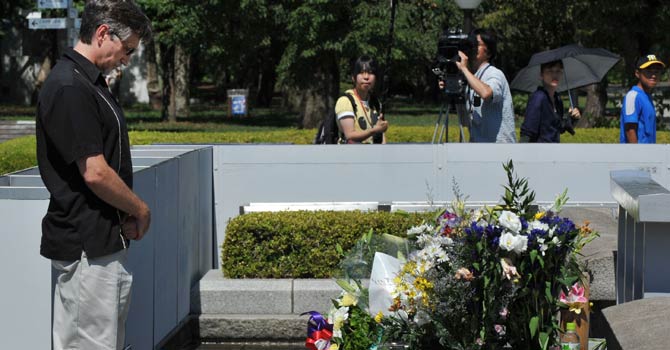
HIROSHIMA: At 8:15 am (2315 GMT Sunday) on Monday, the time of detonation, the toll of a bell set off the minute of silence to mark the anniversary of the atomic bombing of Hiroshima on Monday.
“On this day, in this city, let me proclaim again: there must never be another nuclear attack — never,” said Angela Kane, UN high representative for disarmament affairs, reading a message from UN Secretary General Ban Ki-moon.
“Such weapons have no legitimate place in our world. Their elimination is both morally right and a practical necessity in protecting humanity.”
Some 50,000 people attended the official ceremony at Hiroshima Peace Memorial Park commemorating the US bombing of the city nearly seven decades ago, while thousands of others joined demonstrations, marches, forums, and concerts held across the city, a long-time focal point for the global movement against nuclear weapons.
Among the attendees was Clifton Truman Daniel, 55, grandson of former US president Harry Truman, who authorised the bombing of Hiroshima and the port city of Nagasaki three days later.
In separate rallies on Monday, more than 7,000 people, including atomic bomb survivors and evacuees from the Fukushima area, staged anti-nuclear demonstrations, the latest in a series of protests triggered by last year's crisis.
An earthquake-sparked tsunami left some 19,000 dead or missing and knocked out cooling systems at the Fukushima Daiichi nuclear power plant, causing meltdowns that spread radiation over a large area and forced thousands to leave their homes.
Usually sedate Japan has seen a string of anti-nuclear protests since Prime Minister Yoshihiko Noda in June ordered the restart of two reactors.
Many atomic bomb survivors, known as “hibakusha”, oppose both military and civil use of nuclear power, pointing to the tens of thousands who were killed instantly in the Hiroshima blast and others that died later from radiation sickness and cancers linked to the attack.
Noda has defended the restarts, citing looming power shortages after Japan switched off its 50 nuclear reactors — which once provided the resource-poor country with a third of its energy — in the wake of the Fukushima crisis.
Hiroshima Mayor Kazumi Matsui called on the government “to establish without any delay an energy policy that guards the safety and security of the people”.
But Noda, who also attended the event, only said: “We will establish an energy mix with which people can feel safe in the long- and medium-term, based on our policy that we will not rely on nuclear power.”
There are fears it could be decades before the area around Fukushima is deemed safe for human habitation.
But Tamotsu Baba, the mayor of Namie, a community within a no-go zone near the plant, told reporters ahead of the ceremony: “I renewed my determination to rebuild our town like what Hiroshima did.”