PESHAWAR, Aug 5: Three years after launching Rah-i-Nijat military operation in Mehsud area of South Waziristan Agency, the government has de-notified only one out of six subdivisions as conflict zone in the volatile region since October 2009.
“Only Sararogha subdivision has been declared as ‘cleared’ and the internally displaced persons from the area are allowed to go back to their homes,” said an official.
He said that the remaining five tehsils including Shawal, Sarwakai, Tairza, Makeen and Laddha had not been cleared so far.
“Return programme of IDPs to other areas would be started as and when the military gives green signal in this regard,” he said.
The army had launched operation Rah-i-Nijat (path of salvation) in 2009 to destroy strongholds of banned Tehrik-i-Taliban Pakistan (TTP) in Mehsud area and re-establish government’s writ there.
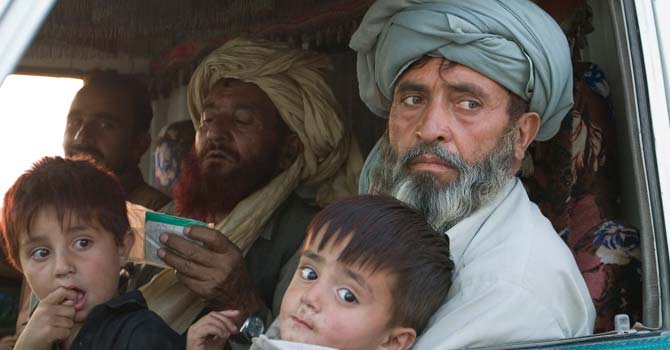
The return process of IDPs to Sararogha is underway with a slow pace as over 8,000 families have returned to their homes during the last one and half year, while 40,000 registered Mehsud families are waiting with host families in Tank and Dera Ismail Khan districts for their turn.
Fata Disaster Management Authority (FDMA) after getting clearance from security forces has to de-notify an area as conflict zone. Of seven tribal agencies in Fata, Bajaur and Mohmand have been completely de-notified as conflict zones. The return process of IDPs to their homes in those two tribal agencies had been accomplished.
Officials said that FDMA had recently de-notified 44 villages in central subdivision of Kurram Agency while Masozai area had not been cleared. The upper and lower subdivisions of Kurram have already been cleared.
Situation in Orakzai Agency is sketchy and security forces have restored government’s writ only in lower subdivision while situation in remaining two sub-divisions (upper and central) is very volatile. Militants still have hold over a large area of the agency, according to sources.
Bara tehsil in Khyber Agency was notified as conflict zone in 2009 and government writ has not been restored there since then.
Sources said that security forces had fully secured lines of communication and dismantled TTP’s infrastructure in the Mehsud territory, but militants still had presence and carried out attacks there.
One division of army has been deployed in the area. Frontier Works Organisation, a subsidiary of the army, has started work on development projects and constructed several roads. The area has no school, health clinic and other basic facilities.
“Army has control over the main roads and strategic hilltops while TTP’s supporters have safe havens in the valleys. They (militants) are using hit and run tactics and targeting security forces with improvised explosive devices,” said a resident of Laddha subdivision.
He said that before launching operation Rah-i-Nijat in October 2009, political administration and military commanders had made commitments with the elders of Mehsud tribe that dislocated population would be brought back to their homes within two months.
The tribesman said that Taliban were still present in Laddha, Makeen, Kanigoram, Karama and other areas.
“In fact local people have no faith in the administration that is why most of the IDPs are reluctant to go back to their homes,” he said, adding that many of those families shifted to Tank and Dera Ismail Khan because of fear and uncertainty.