7
7
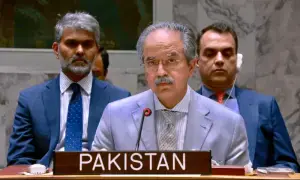
BESIDES adding to the Baathist regime’s regional and international isolation, the suspension of Syria’s membership by the Organisation of Islamic Conference on Wednesday is unlikely to have much effect on the situation in the Levant if the aim is peace. The 57-member bloc coupled the suspension with a call for the development of a peaceful mechanism that would build “a new Syrian state based on pluralism” and a “democratic and civilian system” — ideals that are in keeping with the spirit of the Arab Spring. However, ignoring the plea by Pakistan, Algeria and Kazakhstan that the insurgents be also blamed for the bloodshed, the 57-member body’s final statement said the “principal responsibility” for the fighting lay with the government of President Bashar Al-Assad. The statement coincided with a UN report which said there were “reasonable grounds” to believe that both government forces and the rebels had committed war crimes and “gross violations” of human rights, including “unlawful killing, torture, arbitrary arrest and detention, sexual violence, pillaging and destruction of property”.
Unless there is an agreement on a ceasefire, the Syrian conflict, which has led to 20,000 dead, could expand. Lebanon is already in a state of tension and fear, with reports that four Arab countries have asked their nationals to leave the country following a string of abductions of some Sunnis by a Shia group. The OIC and the Arab League, which suspended Syria’s membership last year, ought to have a uniform policy on dissent in Muslim countries. Their attitudes towards Bahrain, for instance, are in sharp contrast with their Syria policies. While in the former case the Gulf Cooperation Council sent troops to crush the uprising and save the monarchy, in the case of Libya and Syria they have pursued an active regime-change strategy. What happens if tomorrow there is a democratic stir in Arab monarchies, some of which have not given their people even a semblance of constitutional rule? The Syrian situation deserves to be addressed with all sincerity, but as Pakistan’s foreign minister said at the recent Tehran moot, moves that could lead to foreign intervention need to be avoided.