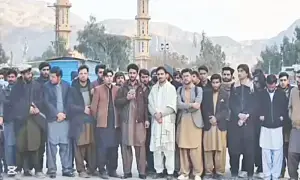
Thursday’s execution-style killing of Shia citizens in Mansehra district and the killing of Hazaras in Quetta were only the latest incidents in what is now a clear trend: targeting innocent members of the sect — not necessarily members of any political or religious organisation — and killing them for no reason other than their religious affiliation. The Mansehra attack had a particularly disturbing aspect to it, with passengers made to show their identity papers and those suspected of being Shia, on the basis of their names or tribal affiliations, being picked out and killed. Like other recent sectarian killings in Balochistan, Kohistan and Orakzai, the approach used resembled ethnic cleansing in its chilling focus on identifying and killing innocent citizens simply because of their membership to a particular community. And while the Hazara community under attack in Balochistan is relatively small and powerless, the same is not true of Shia communities elsewhere in the country. If not arrested, this trend could well spiral out of control, turning the issue into a much larger conflict.
Meanwhile, where is the outrage from the security forces and politicians? We know these groups are willing to launch aggressive messaging campaigns when they wish to. Take, for example, the army’s response to Salala, the PML-N’s reaction to the government’s refusal to write the ‘Swiss letter’, the ruling party’s defensive posture on threats to democracy or the PTI’s campaign against drone strikes. And while it is unclear what judicial activism can achieve in such cases beyond raising their profile, where is the judiciary that otherwise takes suo moto notice of everything from the price of sugar to violence in Karachi? As each of these groups tries to focus on topics they think will boost their populist or nationalist credentials, the campaign to eradicate a minority community continues to receive less official attention than it should.
Beyond the messaging failure, little appears to have been done to confront the physical danger. Providing security escorts to pilgrims’ buses and changing the routes Shia travellers take has not been enough. Whether combating the problem is a matter of improving intelligence-gathering to prevent attacks, pre-emptively going after the groups that are carrying them out, improving policing in vulnerable areas or other intelligence or security measures, further delays are inexcusable. The state needs to demonstrate what it is doing to combat this threat. If not, Pakistan may as well give up any pretence of being a state for anyone other than its majority religious community.