18
18

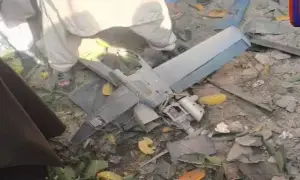
ISLAMABAD: The Foreign Office has started phasing out “drones” from its diplomatic jargon and instead of denouncing the weapon system by name its diplomats now talk about hurtful consequences of “unilateral attacks” for Pakistan.
The purpose could be to restrict the matter to bilateral level.
The shift towards not directly taking up the issue of drones in dealing with countries other than US has been evident for some time now, particularly so after engagements with the Pentagon and CIA on finding a via media for one of the most contentious issues in bilateral relationship.
Foreign Minister Hina Rabbani Khar’s speech at the German Council on Foreign Relations on Tuesday reinforced this impression.
Speaking at the Council, shortly after reaching Berlin, she said: “Pakistan and its citizens often have to suffer from unilateral military actions.”
It was more than obvious that she was talking about the frequent use of drones by CIA to attack militant targets in tribal areas because other than the Osama bin Laden raid in Abbotabad there is only one known incident of the US putting boots on Pakistan soil in 2008.
Moreover, what Ms Khar said in the context of unilateral strikes echoed Pakistani position on drone attacks.
“These actions are inconsistent with international law and they complicate the situation on the ground,” she noted.
Ms Khar also advised the US against pursuing short-term goals.
“We cannot afford to keep our eyes on short-term goals. We must have a strategic long-term vision and devise our action plans accordingly.”
One of the criticism of drone war by Pakistani strategists is that it may be useful in achieving tactical goals, but is strategically disadvantageous.
And while the text of FM’s speech just mentioned “unilateral military actions” that violated international law, the press release on the event issued by the spokesman’s office said she condemned “unilateral drone strikes” for complicating the situation.
The seeming shift in Pakistan’s position becomes more understandable when seen in the light of a statement by Foreign Office spokesman Mr Moazzam Khan almost 10 days ago.
While replying to a question about Pakistan’s likely response to drone attacks, Mr Khan had said: “There are other options available but at the moment we are dealing with this issue bilaterally.”
Quite significantly, Ms Khar didn’t speak about drone attacks in her speech at the NAM conference in Tehran even though she talked about Afghanistan and used the forum to lash out at “major powers” for being “selective” in dealing with international crisis.
A Western diplomat (not from the US), speaking on background, said he too had noticed this change in his recent interactions with Pakistani diplomats.
Meanwhile, Pakistan did lodge a protest with the US against the drone attacks.
There was a sudden spike in drone attacks and in the last fortnight of August there were five attacks taking the total for 2012 to 35.
Pakistan has been lately engaging the US leadership at various levels on drones and was expecting to come up with a mutually acceptable solution.
Foreign Office spokesman Moazzam Khan wasn’t available to comment on the perception of controversy over drones being reduced to bilateral level.
In the past Pakistani leaders had forcefully taken up the matter during bilateral interactions with allies and at multilateral level.