0
0

LAHORE, Sept 7: Punjab is home to 38.17 million illiterates, including seven million children in 5-16 year vital age group, of which, the number of those in 5-9 year group is unknown as the Punjab school education department is in denial mode and claims that only 0.4 million children are out of school.
According to the PSLM 2010-11 survey, as many as 39 per cent 5-9 year age group children are out of school.
While seven million children are groping around in the dark of ignorance in Punjab, the world is celebrating International Literacy Day on the theme “Literacy and Peace” on Saturday (today). The theme was adopted by the United Nations Literacy Decade to demonstrate multiple uses and value that literacy brings to people.
As education brings sustainability to all the development goals, and literacy is the foundation of all learning, Punjab province is struggling with an estimated 60 per cent literacy rate. Gender-wise, the province has 70 per cent male and 51 per cent female literate population.
Rural and urban divide shows 53 per cent and 76 per cent literacy rate, respectively. Sindh has 59 per cent literacy rate, Khyber Pakhtoonkhawa 50 per cent and Balochistan shows the lowest 41 per cent literacy rate.
In Punjab’s case, the literacy rate varies, being the highest in Rawalpindi (79 per cent) and the lowest in Rajanpur (34 per cent).
In nine districts of the province -- Pakpattan, Bahawalnagar, Bahawalpur, Lodhran, Rahim Yar Khan, Muzaffargarh, DG Khan, Bhakkar and Chiniot -- literacy rate varies between 40 and 50 per cent.
Similarly, in 11 other districts -- Narowal, Kasur, Okara, Sahiwal, Vehari, Khanewal, Multan, Jhang, Layyah, Sargodha and Hafizabad – the literacy rate ranges from 50 to 60 per cent.
As many as nine districts -- Sialkot, Sheikhupura, Nankana Sahib, Faisalabad, Toba Tek Singh, Mandi Bahauddin, Khushab, Mianwali and Attock -- present 60- 70 per cent literacy rate.
Only six districts -- Lahore, Gujranwala, Gujrat, Jehlum, Chakwal and Rawalpindi -- boast of more than 70 per cent literacy which are at a crucial stage to raise it up to Millennium Development Goal (MDG) of 85 per cent, which will be an even tougher challenge.
Lack of funds, besides many other factors, including poverty, terrorism, feudal system, poor quality of education, high drop-out rate and above all lack of community involvement are serious hurdles to achieving higher literacy rate, while around 2.8 per cent population growth rate is hitting all initiatives hard aimed at improving literacy in Punjab.
Though it’s still a long way to achieve the MDG that demands 85 per cent literacy rate by 2015, the Punjab Literacy and Non-Formal Basic Education Department (L&NFBE) is working day in and day out to improve literacy and make it presentable to the world around.
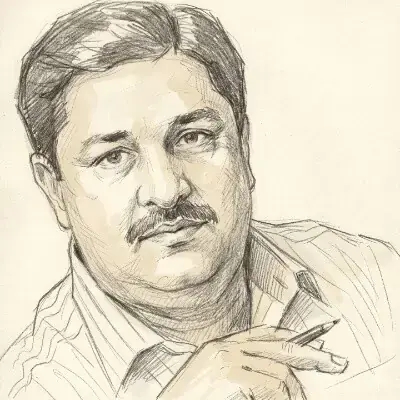
The LNFBE department led by secretary Dr Pervaiz Ahmad Khan has this year won four-year Punjab Accelerate Functional Literacy and Non-Formal Basic Education Project with a total outlay of Rs2.3 billion that will offer access to literacy and non-formal education to illiterate and out-of-school population in all age groups in the province. The project will also offer training in vocational skills, along with literacy, to illiterate adults to help them become responsible and productive citizens. “This project will help around one million children and adults become literate and productive citizens of Punjab and reduce the burden of illiteracy,” he said.
Last year, Dr Khan said, the literacy department brought some 120,000 children into the mainstream education and would continue to follow their academic progress for the next one year. “On our request, the chief secretary has asked all divisional commissioners to help provide uniforms and shoes to these children by seeking help from philanthropists,” he added.
This year, the secretary said, the department had shifted its focus from adult literacy to functional literacy. Currently, the department was running a functional literacy pilot project in Sahiwal division that attracted a large number of illiterate adults.
Under the new four-year programme, the department will set up Community Learning Centres (CLCs) in 29 districts that show less than 65 per cent literacy rate. The graduates completing CLCs’ six-month course will be offered certificates that will be acceptable across Pakistan.
In order to boost literacy base through community involvement, Dr Khan said he had written to the government that it should make it binding for postgraduate students to make at least two children literate before claiming their degrees. The Teachers Training Centres in each tehsil would also be given literacy targets.
He said he had also asked the varsities, including the University of Education, to include non-formal education as a subject in their curricula. “The literacy department, in collaboration with the JICA, has prepared standards for the Non-Formal Basic Education curriculum and is very close to finalise the curricula,” he added.
This year, he said, the department would also be setting up two literacy centres for eunuchs – one each in Lahore and Rawalpindi – and five others in as many major district jails.
In order to make learning a happy endeavour, Dr Khan said, the department had provided sports kits to each of its literacy centre and asked teachers to ensure that all children coming there should observe cleanliness and participate in literary gatherings titled ‘bazm-i-adab’ once a week.
Stating that happiness of everything good in life including health, relationship, and peace emanate from the light of literacy, Dr Khan stressed that the community as a whole should join hands with the state and beat the monster of illiteracy down.
The literacy department is celebrating the International Literacy Day by holding a seminar at Children’s Library Complex on Saturday (today) at 2pm, to be presided over by Commission for Compulsory and Free Education chairman Justice Khalilur Rehman Khan (retired).