UNITED NATIONS: Afghanistan has called on Pakistan to halt cross-border shelling, warning the UN Security Council that the attacks could jeopardise already tense relations between the two countries.
A UN envoy meanwhile said that there were a growing number of “uprisings” against the Taliban in areas of Afghanistan under the group's control.
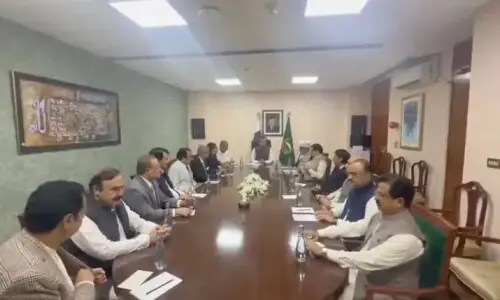
Afghanistan's Foreign Minister Zalmai Rassoul said Thursday that attacks from Pakistan into his country were “a matter of deep and serious concern” and had caused “unprecedented anger and frustration among Afghans.”
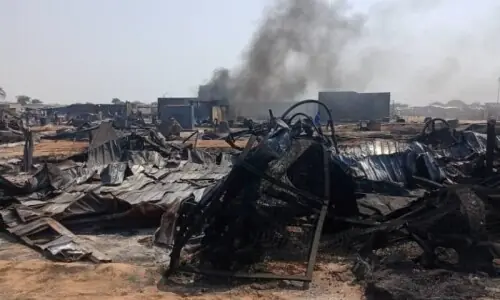
Afghanistan has accused Pakistan of staging repeated shelling barrages across the poorly policed border into Kunar province.
“We reiterate our call for an immediate and complete end to these acts, which have taken the lives of dozen of Afghans, mainly civilians, while leaving many wounded,” Rassoul told the 15-nation council during a meeting.
He said the Afghan government was in contact with Pakistan to end the attacks “holistically and resolutely.”
Rassoul said that Afghanistan wants “close and fruitful relations” with its neighbour, which has frequently been accused of backing Taliban militants seeking to overthrow President Hamid Karzai's government.
Pakistan in turn says groups of Pakistani Taliban sheltering in Afghanistan have infiltrated the border to resume attacks on its security forces.
The UN special representative in Afghanistan Jan Kubis meanwhile told the meeting that “reports of uprisings against the Taliban in various parts of the country are a new development requiring greater analysis”.
He added, however, that the causes of the new violence are “complex”.
“Desire for local communities to have security and justice led them to taking the situation into their own hands. There is a risk of even greater fragmentation of the security environment,” Kubis said.
“Many of these localised conflicts would appear to be resistance to the Taliban, but not necessarily in support of a greater government presence.”
Kubis told reporters that most of the “uprisings” were in the south of Afghanistan and could be a protest against Taliban policies against, for example, schools.
“This is an invitation to the government to increase support for the communities, to increase the delivery of law and order, to increase delivery of government services,” he added.
A US-led international force of some 110,000 troops are in Afghanistan helping the Karzai government fight Taliban insurgents. The force is due to leave by the end of 2014.