0
0

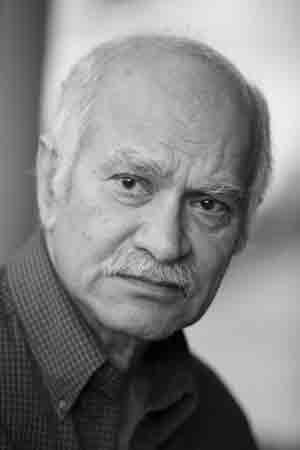
I am writing this on my laptop at 32,000 feet above Amazonia sitting in a Boeing 767 flying from Rio de Janeiro to Texas. Three hours out of Rio and another seven to Dallas, most of the passengers are asleep. I expect to spend much of the time listening to Abida Parveen, the Sabri Brothers, Pathanay Khan and Nusrat Fateh Ali Khan on my iPod.
Right at this moment the pods are filling my ears with Nusrat singing the line, “Shahe-mardan Ali”, in one of his songs that thrills me every time I hear it though I am not a believer. The truth is that I love Nusrat and other qawali singers just as I love Bach’s cantatas and other sacred music not because the music is religious but because it is beautiful.
Perhaps ‘beautiful’ is a vague, even an evasive, word in this context; more exact, perhaps, to say that since all art (and, indeed, science) comes from the human quest for an ultimate knowledge of reality and each artistic expression (and scientific theory) is implicitly a physical gesture in a carefully structured form (created by words, paint, carving, sound or dance, or by mathematical symbols) to access that ultimate meaning, therefore this preoccupation of the artist (and the scientist) is finally a spiritual quest.
And when the attempt by each, the artist and the scientist, seems to accomplish its intended goal, the result possesses an aura of beauty proportional to the intensity of thought, which is inexpressible in any other form and therefore has nearly the quality of an unquestionable revelation, released by the accomplished work. We become possessed by the work, in its presence we are privy to a special vision that initiates a deep spiritual awareness: we are overwhelmed by beauty, we see what is not visible to the naked eye but something so intense we can scarcely define it: we are looking at art, or at pure science.
That which the mind perceives as an aesthetic brilliance is, like the transmission of a secret knowledge, rationally unknowable. One can talk about transcendence, about the divine presence in the dimensions of time and space that create a sense of awe in the human imagination, but in the end all abstract words leave one clinging to some belief while looking at the great incomprehensible void composed of time and space. Language fails us, we become obliged to accept our knowledge of reality as an intuitive apprehension for which no combination of signs and symbols can offer a provable correlative.
Removing the pods from my ears for a minute, I hear the Boeing’s engines roaring outside and imagine becoming separate from the plane and see my body hurtling through the stars into that great void. I have the image of myself as a piece of space debris from an abandoned satellite shooting off on a wild orbit. Whooosh, there goes me! A big metallic chunk shooting off into some black hole. Strangely, a phrase from Dante (from the “Purgatorio”, no less!) echoes in my brain at that moment: “ma dimmi: perché assiso quirrito se?” — the question asked of Belacqua, “tell me, why are you sitting here?” Indeed, a terrifying question at 32,000 feet hurtling through dark space!
But that bit of debris in space, that me orbiting unconstrained by the gravitational pull of any entrenched belief. I’m being sucked into the free-fall zone where one is released from the self, one’s desperate attachment to which, coerced by the self’s insistence on a recognition of its uniqueness, makes a havoc of one’s life; it is a moment when, freed from the imprisoning self, one embraces an otherness, one becomes a diwana, (as in that haunting refrain in Hakim Nasser’s ghazal sung so passionately by Abida Parveen, Jabsé tunhé mujhé diwana bana rakha hai,), which is to say, one enters a state of madness (hence the phrase, “madly in love”), like a Majnu who is mad for Laila, and longs to be consumed by the other (hence, “consummation”).
You will recall Hamlet in his famous soliloquy say, “tis a consummation devoutly to be wished”, where the wished for event is death, which is one of the forms taken by the consuming other — and death in Elizabethan iconography can signify sexual consummation, as when Othello expresses his delight on seeing Desdemona: “If it were now to die, ‘Twere now to be most happy’”.
The diwana’s sensibility envisions the other in the fantastic guise of unimaginable blinding beauty that is seen as both the eternally wished for and the eternally unobtainable; and in that moment, when the mind is possessed by a maddening ecstatic vision lit up by that blinding beauty, the other is witnessed as a manifestation of the divinity whose appearance so fills the mind with light that it remains invisible. Furthermore, to reach that ecstatic vision, the diwana engages in a strenuous exhaustion of physical bonds, which is to say, he goes through a form of death — that devoutly to be wished consummation — which is the peak of sensation experienced as orgasm before the body collapses, exhausted in that sensation in which the sacred and the profane become indistinguishable.
Quickly putting the pods back on, I am soothed by Nusrat’s voice, but hear not words but that passage when only his unaccompanied voice rises in that chanting melodious expression of supreme ecstasy when he abandons words and presents the raag in all its purity. It is the same ecstasy that we hear in the Ode to Joy section of Beethoven’s Ninth Symphony or in the wildly pagan celebration which explodes in a Dionysian frenzy in the final movement of Stravinsky’s Rite of Spring. No one sacred tradition has an exclusive right to express that joy; it is a timeless universal impulse.This ecstasy is a profound interior experience within the human soul. Yes, I, a rationalist whose intellectual prejudices were instilled in him by the European Enlightenment, can talk of the human soul. For me, it is the intense intellectual pleasure — the French word jouissance is perhaps more precise — that does a rapid dance within one’s blood when touched by exceptional beauty which is the essential experience that can be said to be a sensation within the soul. The sensation can be triggered by a variety of stimuli — some you will call pagan and some religious — all of which have that exceptional beauty in common. All spiritual quests crave revelatory vision as their ultimate reward, that moment of the soul’s delight in the purity of form, and great art, releasing aesthetic ecstasy in one’s brain adumbrates that experience of jouissance.
There is an obverse side to that beauty. It is the ugliness of inferior art that fills one with indifference and ennui, which sullies the human spirit. Any expression that does not provoke jouissance is merely a declaration of belief that can have no validity other than the political, it is never more than a flag being waved by a football fan. When I was a schoolboy in London some sixty years ago, I had to endure the daily morning assembly where they read passages from the Bible, recited psalms, and sang hymns. “Onward Christian Soldiers,” the whole school sang, lungs over-inflated with pious air, “marching as to war”. It was unbelievable what the believers thought was their righteous mission. “Marching as to war”! As if it was perfectly fine to slaughter the rest of the world that was not Christian. Such flaunting of supremacist bombast, which of course is not an exclusive Christian trait, is typical of minds that cling to rudimentary dogma and don’t see that such high-sounding words like “crusade” and “jihad” are not noble missions to give you priority access to heaven but are merely synonyms for genocide.
When I listen to Nusrat and hear him sing the line, “Naamé Mohmmed, kithna meetha, meetha lakta hai”, I am in a state of profound spiritual purity that I believe is more devotionally intense than, say, someone going through the motions of prayer in a mosque in the heart of Makkah. He may have cleansed his outward body with the prescribed ablutions and be impeccably correct in the recitation of prayer, but believe me, my response to that supreme coming together of the human voice, melody, the musical form that takes an idea and transforms it into an incandescent thought converts me to a perfect diwana who, if he is intoxicated, is in that state not because of the wine but because of the beauty that all those elements have brought together and exploded within his body with an indescribable force.
To me, St Paul’s cathedral in London, the Friday Mosque in Delhi, the temples in Khujaraho, all provide an intense spiritual experience. It’s nothing to do with religion, but with the human poetical obsession with form that inspires the imagination to create beauty.
When one admires a female nude painted by Velasquez or Ingres, one’s delight in the picture has nothing to do with sexual fantasy, one’s pleasure is stimulated by the form created by the artist; otherwise, there would be no difference between looking at the “Rokeby Venus” by Velasquez and the centerfold of Playboy magazine.
Uh-oh, turbulence! The seat-belt sign comes on conspicuously in the dimly lit cabin.
Some of the sleeping bodies stir, a head shakes across the aisle, looks around as if bewildered, and falls back against the seat. Ooops, it’s quite severe, like being on a bucking horse in a rodeo, and that unbearable racket from the outside, one can hear the metal clattering as if pieces were falling off the fuselage. We must be over the Equator. Happens every time on these north-south flights. As if the two hemispheres tugged at you, each claiming possession in a pull-push contest that sent you on a wild rollercoaster ride when all you ever wanted was serenity. I press the pods in my ears. The Nusrat recording has ended. The divine voice of Abida Parveen has come on. “Jabsé tunhé mujhé diwana bana rakha hai”. I turn high the volume.