WHILE there are different estimates about the size of the informal economy, some consensus is emerging that it has grown to more than half of the formal economy.
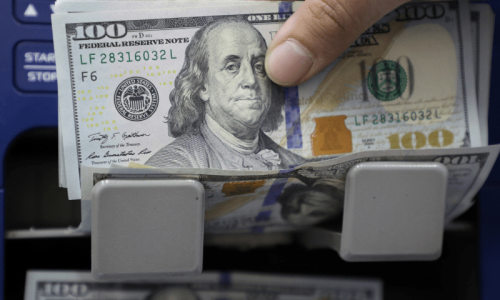
A latest study by the Federal Board of Revenue says it has already gone beyond $100 billion while the figure so far cited by other studies has ranged between $80 and $90 billion.
Determining the size of the informal economy is essentially based on guesstimate because there is nothing on the paper.
However, efforts are made to be close to reality and remain objective. A large informal sector becomes problematic in planning economic development for not enough is known to the state agencies by way of its structure, composition and range of activities.
Often, the term informal economy is not differentiated from black economy or underground economy although the two descriptions are usually used in negative connotation and reflect mostly illegal and crime-related activities.
Since most of the informal enterprises are pursuing legitimate economic activities they can be classified as ‘extra-legal’ economy. The informal sector or informal economy is now seen as that part of the economy which may be partly documented but does not pay taxes, and does not file tax returns.
The FBR report says that the ‘informal or black economy’ has been growing at the rate of nine per cent from 1977 to 2000. It grows along with growth in corruption, speed money, smuggling, narcotics, government contracts and tax evasion.
The FBR, which itself has been partly instrumental in promoting black economy because of its alleged corrupt practices, had the temerity to claim that no government had ‘shown nerves to tackle this problem.’ In 2000-01, it said, Shaukat Aziz had launched a campaign for documentation of the economy but gave up in the face of resistance from unregistered traders, shopkeepers and small factory owners.
The Economic Survey, 2011-2012 observed that the informal economy plays an important and ‘sometimes controversial’ role. It provides jobs but in many cases they are low paid.
This economy employs 73.8 per cent of Pakistan’s total labour force and hence is the largest employer in the country. The employment ratio in rural informal sector (76.5 per cent) is higher compared to that in the urban areas (71.2 per cent).
According to the International Labour Organisation , Pakistan’s informal economy has provided higher level of employment in recent period compared to previous years. The key sectors for jobs are wholesale and retail trade, manufacturing, community/social and personal services, construction and transport.
The 2010 Labour Policy, it notes, had set parameters to provide facilities to the workers in the informal economy.
The government did plan to improve working conditions in mostly small enterprises and also give benefits to home-based domestic workers, such as improved safety and health arrangements and the payment of minimum wages.
But not much has been done to implement the plans.
A study conducted by the Lahore University of Management Sciences (LUMS) in 2003 had concluded that out of Rs100 of taxes due, the government receives only Rs38 and Rs62 is pocketed by the taxpayer, tax collector and tax practitioner.
It means that Rs720 billion tax collection in 2005-06 was only 38 per cent of around Rs2 trillion, which should have been collected by the FBR.
The FBR report refers to a study prepared by the Social Policy and Development Centre (SPDC) which says that the informal economy reached its peak in the early 1960s, when the corporate income tax rate was 30 per cent and super tax was 30 per cent, the aggregate being 60 per cent.
This rate dropped to 40 per cent during the late 1980s.
The FBR report also discusses the reasons for the tax revenue losses stemming from the informal economy.
Many taxpayers, it notes, do not register with the tax departments because the nature of their earnings may be illegal while others do so for the purpose of tax evasion although the nature of their business may be legal.
As a result, tax compliance is the highest in case of the salaried class whose tax liability is deducted by the employer at source.
Agriculture which accounts for 22 per cent of GDP, contributes only one per cent to income tax while industry which accounts for 25 per cent of GDP contributes 63 per cent of taxes. Another reason for evading tax, as Transparency International points out, is the lack of people’s trust in the tax collection system and their doubts about appropriate use of their tax money. As a result, many potential taxpayers prefer to pay large sums as donations and zakat to charities and welfare bodies.
Pakistan is one of the lowest ranked countries in tax-to-GDP ratio but happens to be one of the top ranking countries whose people spend more on charity and welfare activities.
If effective measures are taken to curb corruption, people’s confidence in tax system can be restored and tax-to-GDP ratio can go up considerably. What is urgently needed is a set of incentives for facilitating the transition of informal businesses to the formal sector by removing barriers.