QUETTA: The Supreme Court said on Friday the Balochistan government had constitutionally failed to curb human rights violations, target killings and kidnappings for ransom in the province.
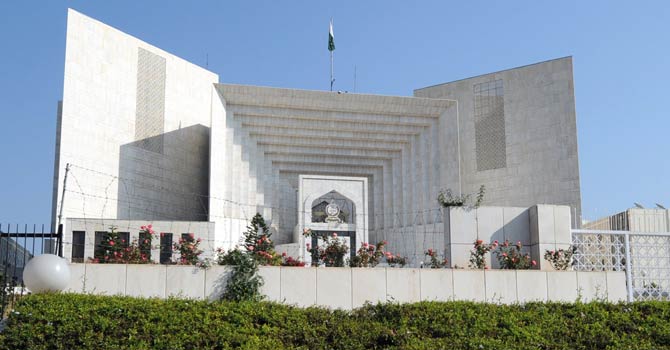
The sweeping criticism of the provincial government’s handling of the situation is contained in an interim order issued by a three-judge bench comprising Chief Justice Iftikhar Mohammad Chaudhry, Justice Khilji Arif Hussain and Justice Jawwad S. Khawaja.
The bench is hearing a petition on the law and order situation and human rights violations in Balochistan at the Quetta registry of the court.
The order said the provincial government had failed to establish the writ of law and lost the authority to govern the province in accordance with the Constitution. Except for deploying Frontier Corps troops, the federal government did not take effective measures to protect the province from internal disturbances.
It said that despite repeated assurances, the federal and provincial governments had failed to honour their commitments. As a result, disappointment, despondency and anarchy are increasing by the day among people.
“It is an obligation of the federation to exercise all constitutional options to ensure that fundamental rights of the people are fully protected, but no option has so far been exercised, as such like to consider political decisions by the democratic governments remaining within the parameter of the Constitution. We are of view that even now it is the constitutional obligation/duty (of the government) under Article 148 (3) of the Constitution to control internal disturbances in the province as early as possible to provide security to the people,” the order said.
The court asked the federal government to take immediate action under the Constitution to provide security to the people against criminal aggression.
“We are of the opinion that without fulfilling the requirements of the Constitution the objectives cannot be achieved.”
The chief justice observed that in their replies, the home secretary, inspector general of Balochistan, director general of Intelligence Bureau, director general of Inter-Services Intelligence and ministries of defence and interior had not denied deterioration in the law and order situation in Balochistan.
He said law-enforcement agencies working in the province appeared to be helpless and there could also be no reason to say that the federal government was oblivious of the grave situation prevailing in the province.
The federal government failed to discharge its duty under Article 148 (3) of the Constitution because it could play its role in cooperation and coordination with the provincial government to control and maintain law and order in Balochistan.
The order said the situation was worsening although there was a democratically-elected government headed by the chief minister and comprising 50 ministers and five advisers, but no-one had come up with a solution. The incidents of sectarian and targeted killings and attacks on settlers have increased manifold. Similarly, there is no end to the incidents in which personnel of the Frontier Corps, police and Levies are being killed brutally.
The order said: “Criminals are free to move anywhere in the province without any hindrance and while riding motorbikes they used to kill people. But so far not a single person involved in such crimes has been arrested. Similarly, law-enforcing agencies, including police and Levies, are not aware of the killers who have thrown mutilated bodies in different parts of the province.”
The court observed that there were charges and allegations against the Frontier Corps that they had taken away people forcibly, but only a few examples were cited to substantiate that such allegations could not be overruled.
The court noted that a good number of people had been given permits for non-duty paid vehicles and illegal weapons and whenever a person was caught in a crime he benefited from the permit.
It directed the department concerned not to issue permits in future for vehicles and weapons. The court ordered that all cases of target killings, abduction for ransom and dumping of mutilated bodies be transferred to the Crimes Investigation Department (CID) of Balochistan.
It asked the authorities to take steps to rehabilitate about 150,000 displaced people of Dera Bugti.
The order endorsed a decision of the Balochistan High Court against publishing statements of the banned organisations claiming responsibility for violent incidents.
The next hearing will be held in Islamabad on Oct 31.