0
0
“Neither militants nor military has won our hearts or minds,” says Shad Mohammad*, a 40-year-old shopkeeper from Inayat Kallay of Bajaur Agency. He clearly remembers how Taliban would publicly beat, humiliate and kill people. His hometown does not feel like home anymore.
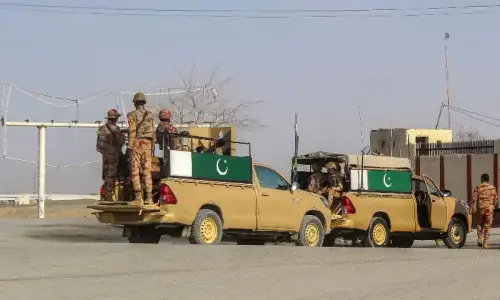
Following the military offensive against the Taliban, the tribal agency has been denotified as a conflict zone since last year even though the local militant commander Maulvi Faqir Mohammad is still at large. Yet, many like Shad Mohammad in Bajaur have no peace of mind. They feel uncertain and anxious, while every day is a fight for survival.
Movement inside the agency is difficult due to long waits at check-posts and the fear of sudden bombing. Shad Mohammad, father of six, does not feel secure even in the presence of the peace committees which comprise armed volunteers who are members of the lashkars formed by the government to maintain peace in the area.
“How can we leave our land and home to the militants?” says 30-year-old Qadir Khan who hails from Salarzai tribe of Bajaur.
He lost his father, uncle and other elders of his clan a couple of years ago during a Taliban attack which was a punishment for taking sides with the government. Having survived many attempts on his life, Khan will never leave the area to his enemies.
“We have not lost resistance. In fact, we have become stronger with time,” says Brig. (Retd.) Mehmood Shah, former Secretary Security Fata. “The military is trying its best to curb militancy and is quite successful. Initially, people sympathised with the Taliban but after seeing the devastation, they have also joined hands with us.”
Brig. Shah believes that civilians abhor militant attacks and have distanced themselves from militants but they have higher expectations from the government to restore normalcy in their lives. “This does not mean that the people are any less resistant towards militants.”
Dr. Ashraf Ali who heads the Islamabad-based Fata Research Cell writes in the July 2012 issue of Tigah, an FRC journal, that militancy has risen in recent years.
Instead of joining the militants who reportedly pay a handsome amount to recruits, people have shown resilience in the face of militancy. They have left their homes and bear the hardships in shelter camps in their battle for survival.
*(names changed for security reasons)