11
11
THERE is no shortage of young talent with restless intellectual energy and entrepreneurial skills in Pakistan. Natural resources are untapped. Despite its economic travails, Pakistan has a middle class that can grow if markets grow.
A Pakistani diaspora in the West could come to the country’s aid. These positive notes within Pakistan cannot become music until governance improves and the writ of the state extends to its borders.
The music has stopped completely after the Pakistani Taliban’s attempt to kill Malala Yousufzai. It also stops whenever they blow up markets, record shops, cinemas, and other places where civilians congregate. No city in Pakistan is immune from these attacks. Thousands have been killed annually.
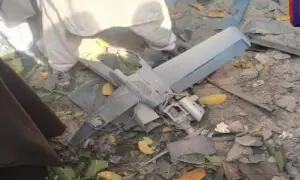
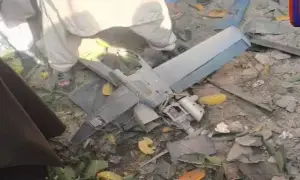
The deaths of innocent civilians from drone strikes represent a small fraction of this carnage. The Tehrik-i-Taliban Pakistan (TTP) didn’t begin this reign of terror because of drone strikes, and they won’t end it if the drone strikes stop. The strongest linkage between these disparate phenomena is that some US drone strikes are directed at those who plan and direct this carnage on Pakistani soil. No one in authority in Pakistan appears willing to acknowledge this.
My advice, freely and repeatedly given, has been for the Obama administration to fundamentally reassess its policy on drone strikes, and to make them exceptional, rather than common occurrences in Pakistan. As was evident in the foreign policy debate between President Obama and Gov Mitt Romney, this is unlikely to happen. As long as US and Nato forces in Afghanistan are being targeted by Afghan Taliban fighters who take refuge on Pakistan’s soil, drone strikes will continue.
When US forces are mostly withdrawn from Afghanistan, and if the Afghan Taliban leadership move themselves as well as their operations across the Durand Line, drone strikes in Pakistan may be significantly reduced — but not until then.
In my view, a qualified suspension of drone strikes within Pakistan is still warranted, even in the aftermath of the attempt to kill Malala. What are the qualifications?
First, if Pakistani authorities privately request them and if the targets are legitimate. Second, if extremist groups continue to plan and carry out attacks on US and Nato forces, Washington would reserve the right to respond — not at lieutenants, but at their leaders, wherever they may be — a difficult standard for Washington and Islamabad to swallow. Third, if there is actionable intelligence about plans to carry out attacks on US or allied territory, the United States would reserve the right to disrupt them.
Taken together, all of these qualifications are likely to result in far fewer drone strikes. These strikes would become even rarer if Pakistani authorities assumed the responsibility of preventing their soil from becoming a launching pad for attacks that ruin Pakistan’s international standing and economic prospects.
A secondary reason for this proposal is that it would clarify the wrongheaded conclusion that drone strikes make every one of Pakistan’s problems worse. I disagree. Drone strikes do not make Pakistan’s economic prospects worse, and the absence of drone strikes would not make deals with the TTP any more likely to succeed.
Drone strikes had nothing to do with the attempt to kill Malala. Nor did drone strikes factor in the ill-fated deal between the Pakistani government and the TTP in Swat, or its predictable demise. Horrific Muslim-on-Muslim violence in Pakistan will continue as long as political leaders look the other way while seeking ‘consensus’, and as long as poor governance, economic stagnation, corruption, flimsy social services, and a deteriorating educational system hold sway.
Even if civilian casualties are kept to an absolute minimum, there are three primary reasons for a reassessment of US policy regarding drone strikes. First, they are unlikely to make a significant difference in Afghanistan’s future dispensation. Second, they can help Pakistan’s armed forces only marginally to reclaim their country’s periphery. Third, drone strikes ruin America’s standing in Pakistan, and decent US-Pakistani relations are one essential condition for a reversal of Pakistan’s fortunes.
Unless drone strikes become exceptional rather than routine, they are a diversion and a hindrance to steps that eventually help Pakistan to become whole.
Whether drone strikes increase, decrease, or are suspended, Pakistan cannot hope to become healthy unless its economy grows. Pakistan could eventually become a beneficiary of its geography if trade flows naturally through Pakistan between Central Asia and the subcontinent.
This promise cannot be realised as long as Pakistan remains at loggerheads with India, and if Afghanistan is mired in perpetual turmoil. Unchecked violence checkmates trade flows.
Afghanistan may remain unsettled for some time to come, blocking Pakistan’s economic growth via Central Asia. Increased trade with India is far more feasible. If leaders in both countries can keep increased trade on course, despite explosions intended to stop progress, radical elements can be marginalised and Pakistan can hope for a brighter future.
The writer is co-founder of the Stimson Centre in Washington.