0
0

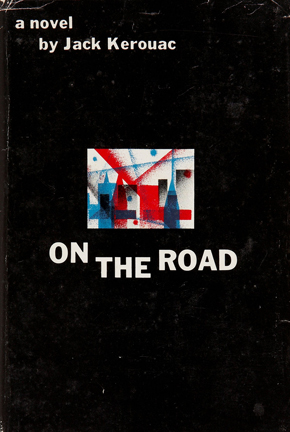
Even if some of its ideas are borrowed, Jack Kerouac pioneers in combining a confessional, journalistic, ‘stream of consciousness’ format of writing. Being one of the icons of the ‘Beat’ generation, he describes this term to mean: ‘submissive, to everything, open, listening... the rebellious, the hungry, the weird and the mad.’
The reason On the Road attracts an audience of 100,000 strong every year is that it is indifferent in the face of adversity. It is the adamant show of life in the worst throes of existence. It appeals to the inner romantic in us, the one that supports the whirlwind, carefree, self-destructive underdog, glorifying flow of almost autobiographical prose.
For the present day reader, this is the time before CCTV, where 10 dollars and some careless thievery could last you for two weeks – a time of bohemian magnanimity between strangers. It’s a time without surveillance, self inflicted or otherwise. Here, defragmented memories can’t immediately be coloured in through photos on Facebook or frantic texts on whatsapp. What is loved is the dance of defiance at the edge of the abyss and knowing that success is possible still. This piece has influenced much of popular culture: Manzarek of The Doors says that without this novel they ‘would never have existed’. Bob Dylan proclaims that it changed his life ‘like it changed everyone else’s’.
Referring to the iconic literary work, Paul Goodman says that with On the Road ‘tradition has been broken, yet there is no new standard to affirm.’ Just as it had torn through society, it seems as though it left within its wake a vacuum. This is not to say that the narrative is going nowhere but that it loops back in on itself. From its bold rebellion against the ‘more bounded men’ of civilised and maybe feminised society, to the heavily edited, yet still essentially hedonistic tone, On the Road is self indulgent and self-loathing. It might be this road tripping back and forth across America, bouncing between security and chaos, which makes such multiple tones of narrative possible.
However, as much as it appears to be the embodiment of haphazard evolution performed outside structured society and seen as ‘performing our one and noble function of the time, move’, there is more organisation involved than we think.
Recently, it has been brought to light by someone who was with Kerouac during this endeavour that ‘each paragraph had to be a ‘poem’.’ Famous to having been written in three weeks, On the Road is actually the labour of restlessness spanning over four years of journal keeping. The book was revised repeatedly from 1951 till 1957 when Viking Books agreed to publish it. The document underwent further ghost editions to sweep the homoerotic and overly sexual tones under the rug. However, the original scroll on which the manuscript was typed up with the aid of copious amounts of Benzedrine still exists, and was sold for £1.6 million in 2001, a record price for a literary work.