29
29

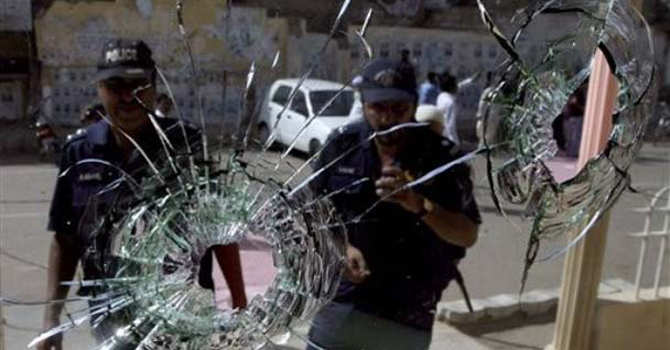
Two years ago on May 28, eighty-six members of the Ahmadiyya community were massacred in their places of worship in Lahore, during the Friday congregation. Since then, an all-out war seems to have been declared against them with the oppressors becoming more vitriolic and aggressive.
“Since the extremists apply their rule of death for apostasy, Ahmadis are the first to be targeted. Their persecution will increase by wider margins, if the extremists grow stronger,” warns rights activist I.A. Rehman of the Human Rights Commission of Pakistan (HRCP).
Sherry Rehman, Pakistan’s ambassador to the US cannot agree more. She calls the persecution of this community “unconscionable”.
“Violence and the advance of bigotry, prejudice and hate against minorities have never really been met with the resolve needed to remove impunity from the social equation in Pakistan; instead, what we see is an expansion in the space for religious and sectarian apartheids, which has led now to heinous acts of brutality, exclusion and ‘otherisation’ of many, particularly Ahmadis,” she declares, adding, “This is a dangerous trend that conflates national identity with religion.”
Whether it is the belligerent stance of extremists against the community, which unfortunately remains under government radar, or other reasons, Pakistan today is burdened with religious prejudice due to certain religious clauses in its constitution. Since the beginning of the year, 13 Ahmadis have been killed and there have been three major attacks on their places of worship. In all these attacks in Rawalpindi, Lahore, Khushab and Kharian, the police have been involved. “In Kharian, an armed contingent of police began demolition of the minarets after dark without a court order to support their sacrilegious act,” states the Ahmadiyya spokesperson.
As the country gears up for the general elections in 2013, those eligible for voting from the four-million Ahmadiyya community will not cast their votes. “We are Pakistanis, but we are separated and discriminated from the mainstream on the basis of religion,” says Saleemuddin, spokesperson of the community in Pakistan. “This is against the very spirit of democracy,” he adds.
For the community at least, he states, the separate electorate imposed by General Ziaul Haq in 1985, remains despite the “erroneous impression” that Pakistan has shifted from separate to joint electorate.
“In 2002, through a presidential order, issued on June 17, 2002, Pervez Musharraf created a separate supplementary list of voters in which Ahmadi voters were placed as non-Muslims. That order has not been cancelled, and remains enforced,” says Saleemuddin from Rabwah, located in Punjab and also known as Chenab Nagar, where 95 per cent of the people are Ahmadis.
Again in 2008, to register as voters, those who claimed to be Muslims had to sign a certificate of faith and deny the veracity of the founder of the Ahmadiyya community. When they disagreed, they were automatically denied their right to vote. And thus, as in 2008, the community has decided to again boycott the coming elections.
Since 1974, after being officially declared non-Muslim by the state, various civilian and military governments have passed a series of ordinances, acts and constitutional amendments discriminating against Ahmadis.
“In its formative years, the Pakistani government declared Islam to be the state religion,” said Bushra Gohar, a member of the National Assembly and central vice president of the Awami National Party, at a lecture in New York on the fate of religious minorities in Pakistan. “The military dictatorships have added religion to the constitution in even larger doses.”
Zohra Yusuf, chairperson HRCP, makes no bones about accusing the Punjab government of complicity. “It is certainly guilty as it has given in to the demands by Ahmadi-haters many times — by breaking down minarets and not allowing them to hold religious meetings, etc.”