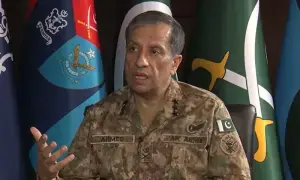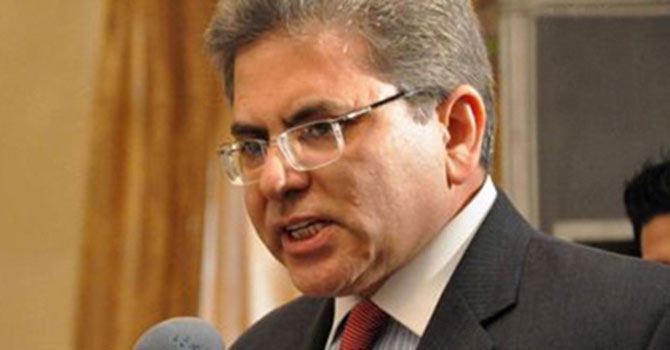
KABUL: Pakistan hopes to persuade Afghan insurgent groups, including the Haqqani network, to pursue peace but worries resistance from political factions opposed to the Taliban could undermine reconciliation efforts, Islamabad’s ambassador to Kabul said.
Mohammad Sadiq, speaking in an interview, also suggested US efforts would be better directed at engaging insurgent groups – rather than attempting to defeat them by launching military strikes against their leaders.
Sadiq was speaking just ahead of an expected visit to Pakistan by an Afghan peace council due to give Islamabad a road map of how it wants its influential neighbour to help end the war with the Afghan Taliban, now in its 11th year.
“Afghans are much more united in wanting to join the reconciliation process than they were two years ago,” he said.
“But still there are very important people who fought against the Taliban and are not still ready to talk and negotiate with the Taliban. And we are working with them.”
Sadiq was referring to former members of the Northern Alliance, which toppled the Afghan Taliban in 2001 with US backing.
Some now occupy government positions or are in the opposition.
President Hamid Karzai set up a High Peace Council comprised of members of diverse Afghan ethnic and political groups to try to ease mistrust between the Taliban and its traditional enemies and forge a peace deal.
The task has gained urgency as most Nato combat troops prepare to withdraw at the end of 2014 and hand over security to Afghan government forces.
Lack of progress has fuelled fears of a civil war and some Afghans worry the Taliban will try and seize power again if no comprehensive political settlement is reached before then.
Pakistan’s appeal to ‘entire Afghan armed opposition’
Afghanistan’s government has failed to secure direct talks with the Taliban and no significant progress is expected before 2014, a senior Afghan official closely involved with reconciliation efforts told Reuters on Friday.
Afghan officials have often seen Pakistan as a reluctant partner in attempts to broker talks, saying Islamabad is long on promises and short on action.
Kabul accuses Pakistan’s spy agency of using groups like the Haqqani network as proxies to counter the influence of rival India in Afghanistan. Islamabad denies the allegations.
“The prime minister of Pakistan had appealed to all insurgent groups to engage in negotiations,” said Sadiq.
“We will encourage all insurgents. We will encourage the entire armed opposition of Afghanistan to participate in peace negotiations with the Afghan government.”
The Haqqani faction, allied with the Taliban, is seen by the US as the most dangerous Afghan militant group, blamed for high-profile attacks in Kabul and other cities.
Afghanistan said in August it believed a top commander of the group, Badruddin Haqqani, had been killed in a US drone strike in Pakistan.
Pakistan has argued that negotiations stand a better chance of delivering stability.
“I think normally with insurgents one thing is very clear - that deaths have not weakened them because they replace commanders very quickly. They’re able to replace them in a day or so,” said Sadiq, suggesting the Americans should have learned from the Russian experience in Afghanistan in the 1980s.
“They have people. By killing their people you cannot weaken them. The Soviets killed 1 million, 2 million people. It didn’t weaken the insurgency against them.”
Afghanistan is known to want access to Taliban leaders belonging to the so-called Quetta Shura, or council, named after the Pakistani city where they are said to be based, an issue the peace council is likely to raise. Pakistan denies giving sanctuary to insurgents and says no Taliban leaders are in Quetta.
An official with the council said it would also be pushing Islamabad to repatriate Mullah Abdul Ghani Baradar, the Taliban’s former second in command, in detention in Pakistan.
Afghan officials believe Baradar could serve as an effective conduit for negotiations with Taliban leaders if sent to Kabul.
An Afghan official told Reuters that Pakistan had promised to hand over Baradar in September.
Asked what Pakistan would be willing to do to push the struggling reconciliation process forward, Sadiq said:
“Expectations should be reasonable about what we can do because Pakistan and Taliban are not one party. We don’t control them, we don’t give them weapons, we do not give money to them.”
Sadiq said Afghanistan should strive to make sure any government that runs the country should include all ethnic groups and parties to preclude any repeat of past turmoil.
“A representative government will automatically help in reducing the insurgency, reducing the tension among ethnicities, it will go a long way in preventing a civil war.”