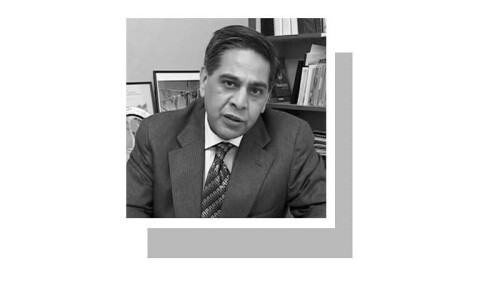
NEW DELHI: Former Pakistani president Pervez Musharraf said on Saturday that India and Pakistan need to “bury the hatchet” and settle their differences to reduce poverty and ease tensions in the region.
Musharraf fought against India in 1965 and 1971 wars and led Pakistan’s army in the 1999 Kargil conflict.
“We need to resolve the long-standing disputes between India and Pakistan because these are the causes of hatred, causes of conflict and the wars,” Musharraf told a media conference in Indian capital New Delhi.
“It’s doable,” he said, talking of resolving Indo-Pak disputes.
Musharraf, who ruled Pakistan as a military dictator and later as a civilian president between 1999 and 2008, said the issues need to be resolved to improve the “socio-economic development” of South Asia, home to hundreds of millions of poor.
“It is high time we open our eyes to reality,” said Musharraf, who has lived in exile in Dubai and London since stepping down in 2008.
“We need to bury the hatchet.” But “compromise should come from the bigger party. India should have a big heart because it is the bigger country,” he said.
Musharraf said that all outstanding disputes between India and Pakistan should be dealt with at the same time rather than following a “step-by-step” process.
Chief among the conflicts to be settled is the disputed Himalayan region of Kashmir, he said.
“This is actually the root cause which spawns not only war” but also “religious militancy in Pakistan”, Musharraf said at the Hindustan Times Leadership Summit.
Muslim-majority Kashmir is divided between India and Pakistan along the heavily-militarised Line of Control border.
It was plagued by violence for decades as armed groups fought for the region to become independent or part of Pakistan. While violence has fallen sharply in recent years, simmering tensions remain.
Turning to Afghanistan, Musharraf said the country faces two possible scenarios when US troops pull out in 2014.
“Either Afghanistan goes back to 1989, when the Soviets left and warlords began fighting, or it goes back to 1996, when the Taliban came. If the US leaves a minimum force, then the situation should be maintainable,” he said.