3
3

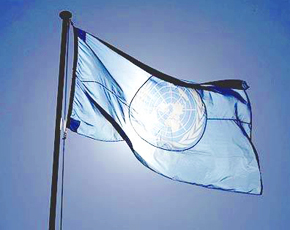
It’s an institution that’s supposed to work for the world – in times of peace and crisis – bringing together the best people to do the greatest good.
Well, at least, that’s the goal. And, one can’t but agree with it.
But, just like other institutions – big institutions – the reality is often different from what it should be.
In times of a crisis, a war or internal conflict, you have the image of a vehicle with flying a UN flag on it rushing to the scene of crisis or a “special envoy” or the Secretary-General himself scurrying to parley and make peace.
That’s the thing to be done, the right course of action to undertake.
Now, let’s move from the general to the specific, from what should be to what has been.
A few days ago, the UN Secretary-General’s Internal Review Panel on United Nations Actions in Sri Lanka came out with a report.
Among other things, this is what it said:
Seen together, the failure of the UN to adequately counter the Government’s under-estimation of population numbers in the Wanni [erstwhile war zone in northern Sri Lanka], the failure to adequately confront the Government on its obstructions to humanitarian assistance, the unwillingness of the UN in UNHQ and Colombo to address Government responsibility for attacks that were killing civilians, and the tone and content of UN communications with the Government on these issues, collectively amounted to a failure by the UN to act within the scope of institutional mandates to meet protection responsibilities.
In 2007, the Sri Lankan government launched a military campaign to rid the country (rightly in my view) of the militarist Liberation Tigers of Tamil Eelam (LTTE), a formidable terror machine, which wanted to carve out a separate state for itself in the northern and eastern part of the country.
The whole of the northern Jaffna peninsula was in the hands of a reinvigorated Sri Lankan army by the middle of January 15, 2009.
In May 2009, the LTTE collapsed like a house of cards when its ruthless leader Velupillai Prabhakaran and other senior Tigers cadres were killed by Sri Lankan government forces.
But this is not about Prabhakaran.
It’s about the defenceless Tamil civilians who were caught in the war zone, being shelled by the Lankan Army and used as human shields by the LTTE, which desperately tried to delay the inevitable.
According to the Internal Review Panel’s report, in September 2008, Colombo informed the UN that it could no longer guarantee the security of staff in the Wanni, the last remaining battle zone. Within three weeks, all UN staff was out of the area.
The report laid out in great detail the UN assessment of civilian casualties in the war zone, presented by the Resident Coordinator to diplomats on March 9, 2009:
On 9 March, the RC and some UNCT [UN Country Team] members presented an estimate of casualties to the diplomatic corps in Colombo. They listed the “total minimum number of documented civilian casualties”, between 20 January and 2 March 2009 in Mullaithivu District, at least 2,683 deaths and 7,241 injuries, two-thirds of which occurred within the latest 14 km² NFZ [No-Fire Zone]. The briefing and accompanying documents were forthright in describing LTTE human rights and international humanitarian law violations – including “the forced recruitment of men and women … [and] children as young as 12, at least one mass execution of civilians, mass corporal punishments…the blocking of corridors for civilians trying to leave the combat area … the forced movement of civilians, the placing of weapons in areas of civilian concentration, and the diversion and possible withholding of humanitarian aid to civilians.” However, the briefing did not explicitly address Government responsibility for the situation or for shelling. The COG [UN Crisis Operations Group] had prepared a casualty sheet which showed that a large majority of the civilian casualties recorded by the UN had reportedly been caused by Government fire, but the UN did not present this data. And when describing the lack of food and medicines, the briefing did not explain that the most immediate causes for the severe shortfall had been Government obstruction to the delivery of assistance, including its artillery shelling.
Worse was to follow. Senior UN officials, names and designations listed below, while ready to condemn the LTTE, showed a clear and present desire to shield the Sri Lankan government from grave allegations that grave violations of international law might have taken place.
The report continued:
Three days later, on 12 March, at a UNHQ meeting of the Policy Committee to discuss Sri Lanka...[redacted in original]...The next day, after receiving a draft of the statement, the Chef de Cabinet [former Indian diplomat Vijay Nambiar], the [Under-Secretary General] USG-Humanitarian Affairs [John Holmes], and the RC [Neil Buhne] all wrote to the OHCHR [Office of the High Commissioner for Human Rights] leadership urging that the statement be changed to exclude specific reference to the number of casualties and possible crimes and violations of international law by the Government. DPA [UN Department of Political Affairs] supported the statement. OHCHR released the statement on 14 March without substantive changes, listing the COG statistics, describing them as credible, and stating that actions by the Government and LTTE “may constitute international crimes, entailing individual responsibility, including for war crimes and crimes against humanity.” Throughout the final stages, the UN issued many public statements and reports accusing the LTTE of committing human rights and international humanitarian law violations, and mentioning thousands of civilians killed. But, with the above exception, the UN almost completely omitted to explicitly mention Government responsibility for violations of international law.
All this is now in the public domain. Whatever actions follow or don’t follow from this internal report, the facts will not change – that the UN failed the poor, innocent Tamils that were caught in the crossfire between the Tigers and the Sri Lankan State.
There’s much more to be said, but am going to stop now. For the interested, here’s the full report.
We need to point the finger at those who were responsible for the deaths of Tamil civilians and those who wanted to protect the Sri Lankan State.
It’s not too late.

The views expressed by this blogger and in the following reader comments do not necessarily reflect the views and policies of the Dawn Media Group.