INTERNATIONAL Day for the elimination of violence against women was observed all over the world on Nov 25. This day recognises the rights of women to live in a violent-free environment and emphasises to global leaders to take action for combating violence against women.
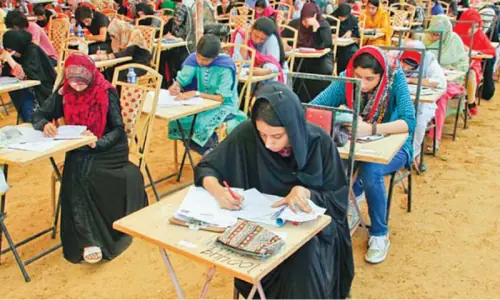
In the global context, women are regarded as indicators of development. The shifting paradigm of globalisation has resulted in the increased participation of Pakistani women in the field of education and workplace, besides their active role in the development of society.
In Southeast Asian countries the curse of violence against women is routinely practised in the shape of unreasonable conduct of harassment, particularly in Pakistan and India.
Unfortunately, there are a few culprits in Pakistani society who promote violence and mistreatment against women and advance barriers to halt their social as well as economic development.
It is shocking to quote that violence touches not only the boundaries of houses and workplaces in rural areas of Pakistan, but also where educated people are living or employed. The trend of gender inequality is common in our society where women are mostly marginalised and considered least important in the decision-making process. Although this truth is bitter to absorb, it is the reflection of the current state of women in Asian countries.
We cannot refute the fact that Pakistani women are strong but when they face harassment at home or workplace, many factors make them reluctant to make allegations against the culprits. These include fear of losing their jobs, societal pressure, embarrassment or shame at being harassed.
The media portrays regular cases of harassment which confirm that our society is not safe for women. Keeping in view the recent and past incidents, Pakistan signed a few international documents to advocate women’s rights at every platform and also passed a few national bills, including the Protection against Harassment of Women at Workplace Bill 2010, and Domestic Violence Bill 2012.
Turning bills into realities were a big step and it was assumed that male culprits would think a million times before harassing any women, but all laws fell flat as the element of practical implementation of rights are missing.
The current government has worked a lot for the economic development of women but the need of the time is to recognise their social rights.
To change the attitude of the people of Pakistan towards women, the government should recognise their importance and equal rights must be practised.
MUNIR MOOSA SEWANI Karachi