



 1
1

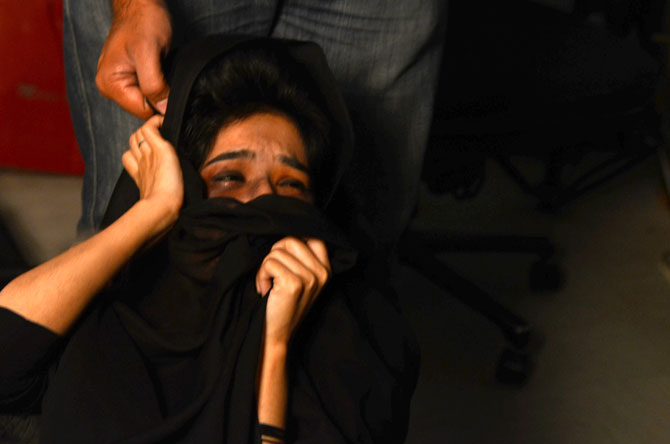
Domestic violence breaks up families, even takes lives and leaves permanent psychological scars on those who survive. Dr Ambreen Ahmad, an Islamabad-based psychiatrist calls it a “destructive force” that annihilates anyone who experiences it. “It spares none that comes in contact, not the abused, not those who witness it, not even the abuser,” explains Ahmad.
Dr Asha Bedar, a Karachi-based psychologist, explains in detail how violence in the family, mostly spousal and perpetrated by the husband, can affect entire families on both sides. “Often family members turn a blind eye pretending it just isn’t happening, putting all the blame on the victim,” she says.
However, even when the family is supportive, aggression may not stop. “Because of the helplessness, stress, guilt, anger and fear that families may encounter, family relationships are affected in the process. Often members resent, blame each other and misunderstandings emerge,” she points out.
Of all the members, it’s the children who are the worst off. Everybody reacts to the violence differently. “Some become actively involved and physically try to stop the violence, some become emotional or physical caretakers of their mothers, or call for help. Still others remain helpless bystanders, knowing that they cannot control the violence or are too afraid to try lest they too are caught up in it,” elucidates Bedar.
Citing a national research carried out in 2002 (of which she was a part), on the effects of family violence on children, Bedar says: “I remember how openly and clearly even very young children expressed their anger.” While the anger is usually directed towards the father, it can also extend to the mother for being in the violent situation and for not being able to protect either herself or her children. Many blame themselves for the conflict.
Bedar also points out that in young girls, often the effects are internalised. “They may feel depressed, anxious, helpless, under-confident and hopeless about the future; they can become socially withdrawn, while some may develop physical symptoms,” she states.
In boys, the effects are externalised and may manifest as aggression, violence, drugs or risk-taking behaviour. While every child, family and situation is different, psychologists say several factors combine to “mediate the impact” of exposure to violence on a child.
“I’ve had a number of cases where families (usually mothers) have brought in their children for counselling for behavioural issues such as aggression, violence or drugs, self-harming behaviour (including suicidal attempts), extreme self-esteem issues and depression, and later it was discovered that they have been exposed to domestic violence. Sometimes they do not make the connection,” Bedar puts in plain words.
Parents sometimes believe that because the children have not been physically harmed or that it is happening behind closed doors, they won’t really be affected. Children are a lot more alert to happenings around them than what parents give them credit for, say experts, and are often able to pick up the fact that something is not quite right, even if they can’t express it.
Research after research has proved that violence perpetuates violence. Girls who develop violence-accepting attitudes, say experts, may become more tolerant of violence in their own lives if it occurs, experiencing a sense of helplessness in response. As for boys, while it may have distressed them to see their mothers suffer, they may grow up thinking this is a normal way of behaving towards a woman.
However, Bedar cautions: “It is extremely important to note that while many adult abusers have been direct or indirect victims as children, in no way does this mean that all boys who are exposed to violence are likely to grow up to be abusers.” According to her, many children, exposed to violence, grow up to hate and oppose it, striving never again to encounter it either as perpetrators or victims.



























