



 0
0

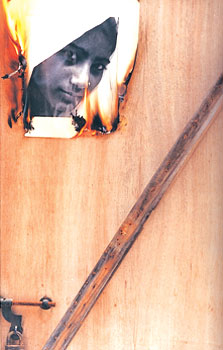
The constitution of Pakistan states that there shall be no discrimination on the basis of sex alone and that the state shall make provisions for the protection of women (Article 25), encourages the promotion of social justice and the eradication of social evils (Article 37), and ensures that the dignity of man (and woman), and subject to law, the privacy of the home, shall be inviolable (Article 14).
However despite these rights being enshrined in the constitution, violence against women is still prevalent in all strata of our society. Though women-centric legislation has been promulgated earlier as well, post-2002 women parliamentarians aided and supported women and human rights groups. With Superior Courts positively interpreting the existing laws viz Islamic jurisprudence, the legislature has finally arisen but is far from perfect and does not address all issues as per the practical needs and rights of women ensured by the constitution and religion. Despite all that, it is definitely a step in the right direction.
However, the biggest hindrance that women face is society itself.
Some of the main reasons that women are not able to seek justice or stand-up for their legal rights are that women are either illiterate or less educated or insufficiently aware of their religious, moral and legal rights which play an important role in their deprivation. Additionally, they are intimidated with dire consequences regarding family relations, including no support from their birth family and threat of divorce from the in-laws; this is further exacerbated by the threat of social stigma/ostracism in the event the woman moves to attain justice herself.
It is also important that a woman is economically independent, so that if she braves the social stigma/ostracism, she is at least able to support herself in a dignified and respectable manner.
It is also difficult, if not impossible, for women to approach the police (who have the same views that society holds) who can and do intimidate/harass a woman who they perceive as “alone”. Indeed the recent cases of rape by security forces, as reported in the media, are a deterrent to women looking towards the muhafiz (protector) for their hifazat (protection), and the dearth of women police stations where women may be able to take their complaints without fear, needs to be looked at carefully. Similarly, the gender-sensitisation of policemen needs to be more effective.
In his speech at the meeting of the Muslim University Union, Aligarh, on March 10, 1944, Quaid-i-Azam said, “No nation can rise to the height of glory unless your women are side by side with you. We are victims of evil customs. It is a crime against humanity that our women are shut up within the four walls of the houses as prisoners. There is no sanction anywhere for the deplorable condition in which our women have to live.”
While as a nation, we need to understand that it is imperative that women are educated and aware of their religious/legal rights, men need to know their religious/legal duties towards women in all matters. Women must abandon their fear of social boycott and stand up for their legal rights and the society must understand that a woman asking for her legal rights should not be made a social pariah.



























