0
0

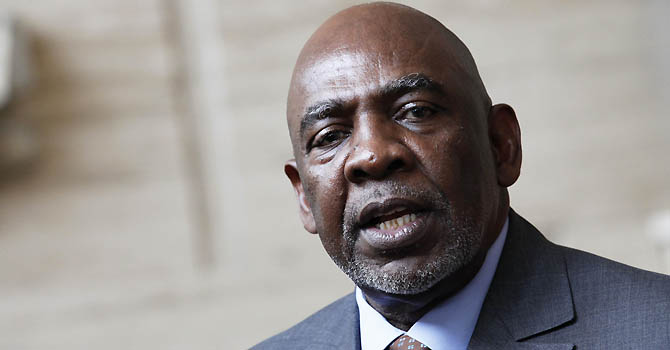
BAMAKO: Malian Prime Minister Cheik Modibo Diarra announced the resignation of himself and his government early Tuesday just hours after he was arrested at home by soldiers acting on the orders of ex-coup leader Amadou Sanogo.
“I, Cheik Modibo Diarra, I resign with my government,” Diarra declared in a brief speech given at the premises of, and aired by, national broadcaster ORTM.
He gave no reason for his decision.
Mali's prime minister was arrested at his home late Monday night by the soldiers who led Mali's recent coup, according to two security officials.
Prime Minister Cheikh Modibo Diarra was planning to leave for Paris on Monday night when the soldiers arrived at around 10 pm, said the two officials, both of whom requested anonymity because they were not authorised to speak to the press. The prime minister was forced into a car and driven to the Kati military camp, the sprawling military base where the March 21 coup was launched, under the orders of coup leader Capt Amadou Haya Sanogo.
At around 3 am on Tuesday, a ticker on the screen of Mali's state television station announced: ''In a moment, a declaration by Prime Minister Cheikh Modibo Diarra.''
For several weeks, tension has been mounting between the officers who led Mali's recent coup and Diarra, the prime minister they were forced to appoint when they handed back power to a civilian transitional government.
Last weekend, Diarra organised a demonstration calling for a United Nations-backed military intervention to take back Mali's north, which fell to Islamic militants in the chaos following the coup.
''It's something we should really be ashamed about,'' said a police officer at Bamako's international airport who was on duty Monday night, preparing for Diarra's departure for Paris. ''The plane that was to take the prime minister to France was on the point of departure. It was stopped by people from the group Yerewoloton who invaded the airport. The people from Yerewoloton are still at the airport as we speak, searching cars.''
Yerewoloton is a citizen's movement, which is believed to be backed by the junta. In May, soldiers aligned with the junta allowed them to break through the security cordon at the presidential palace. They entered and beat up the newly appointed interim president, 70-year-old Dioncounda Traore, who was then evacuated to Paris for treatment.
The beating of Traore brought immediate international condemnation and it was after the May 21 incident that coup leader Sanogo was forced to retreat from public life. He has kept a low profile in recent months, emerging only occasionally to criticise a military plan by the nation's neighbor Mali, which wants to send 3,300 troops to take back Mali's north.
On Monday at the United Nations, France circulated a UN Security Council resolution that would authorise the deployment of an African-led force to oust al Qaeda-linked militants who seized Mali's northern half. The United States, however, wants the troops to be trained first for desert warfare, UN diplomats said.
There is agreement in the UN's most powerful body that there must be a two-track solution, political and military, to try to wrest control of the north, an area the size of France, and successfully reunite Mali.
But the Security Council is divided on the speed of military action, with the US recommending a slower, two-stage authorisation process, said the diplomats, speaking on condition of anonymity because the draft and proposed US amendments have not been made public.
Country experts have voiced skepticism over the military intervention, specifically because the plan initially put forward by the African Union gives a central role to the Malian military, which is still in the hands of Sanogo. African diplomats who have been involved in the negotiations with Sanogo earlier this year, leading to the creation of Diarra's transitional government, say the coup leader does not want foreign forces on Malian soil because it would dilute his power.