KARACHI, Dec 17: A new entertainment phenomenon has taken the Pakistani television audience by storm. Ironically it has nothing to do with local Pakistani TV stars, directors or producers. Rather it is the drama serials (some suggest they are categorised as soaps) produced in Turkey that Pakistani TV viewers have taken a shine to.
It all started with a play titled Ishq-i-Mamnoo, dubbed in Urdu and run by a local TV channel. For initial few months nobody realised what had happened. Then all of a sudden it dawned on everybody that it was garnering the highest ratings on TV.
As a consequence, some Pakistani production companies started to feel jittery about the whole affair. Many issues were brought up, some of which had already resulted in blocking of Indian TV channels in Pakistan.
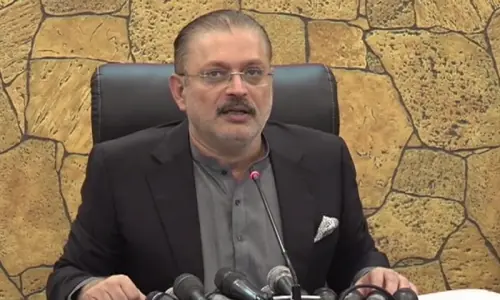
A press conference held by the United Producers Association (UPA) and TV artists of the country at the Karachi Press Club on Monday in that context was inevitable. It was supposed to take place on Saturday, but owing to the volatile situation in the city it was postponed.
Speaking on the occasion, UPA chairman Rashid Khawaja said: “The time slot that was traditionally meant for ‘our family time’ has now been given to imported dramas and a few other channels have followed suit. We will not let this happen. As per Pemra regulations, TV channels are permitted to air 10 per cent foreign content, which means two hours and 40 minutes out of 24 hours. But Pemra did not mention at what time that content should be aired. As a result, of the three-hour prime time slot (from 7pm to 10pm), two hours and 40 minutes are now given to non-Pakistani productions, which leaves a margin for only 20 to 30 minutes for indigenous material.”
Mr Khawaja put forward three demands: (1) No Indian or other foreign dubbed content should be aired during prime time, (2) the UPA should be consulted while redesigning the regulations, and (3) UPA members should have representation in Pemra’s policymaking.
Something like this had also happened in the past when the issue of ‘cultural invasion’ was raised vis-à-vis Indian TV channels.
After a lot of hue and cry, the government banned them but since there was a demand for such programming, a certain percentage of Indian shows were allowed to be aired. This is why today quite a few Pakistani entertainment networks run popular Indian reality shows.
But actress Saba Hameed was cognisant of this fact so she emphasised at the press conference that it was not about ‘culture’. She instead argued: “We have gathered here to protect the industry. All we want is that our channels should run our TV plays.”
There is a definite sense that the local market has been hurt by foreign programmes. TV channels buy them at cheap rates, and according to Rashid Khawaja, taxes are not deducted on these plays either. When asked if those issues were taken up with the owners of the TV channels, actor Asif Reza Mir said: “We haven’t but the message has been conveyed indirectly to them. It must be understood that the UPA or actors do not have any thing against the TV channels. But we will keep protesting until we achieve our goal.”
The matter is not that simple. For if the claim that a lot of people are involved with the drama industry is right, it cannot be overlooked that a decent number of artists have lent their voices for the dubbing sequences of these plays. Will they be affected if the UPA’s demands are met? According to actor Humayun Saeed they will not.
Actor Nabeel voiced his concern at the press club by saying that in 1995 when an Indian channel began running a Pakistani drama, Indian advertisers threatened it with not giving their commercials during that time slot. Hypothetically speaking, if the demands of these actors are met, will they also do something to save the Urdu language from being butchered on morning shows and try to lift the level of Pakistani TV plays from that of mediocre to superlative?