0
0
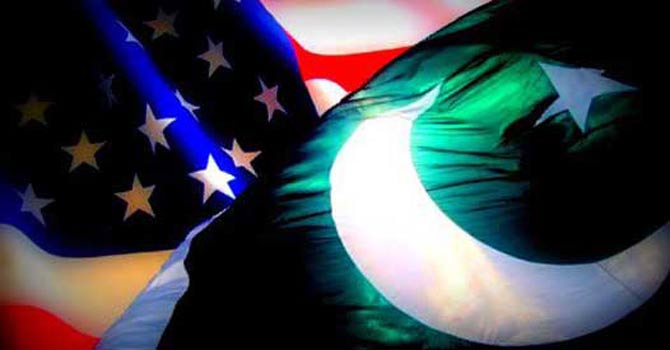
WASHINGTON: Pakistan’s ties with the United States appear to be improving gradually as the year 2012 ends, creating space for a relationship built on ground realities rather than unrealistic expectations.
When the year began, the bilateral relationship was held hostage by two major incidents that happened in 2011, the US raid in Abbottabad that killed Osama bin Laden and the Nov 24 US air attack that killed 22 Pakistani soldiers in Salala.
Pakistan also had a new ambassador in Washington, Sherry Rehman, who was still struggling to create a space for herself in the US capital’s power circles.
Bilateral contacts had been reduced to a minimum and mutual distrust was at its height.
The US-Pakistan Strategic Dialogue, started before the Abbottabad raid with the promise to promote close political, economic and defence ties between the two nations, had stalled.
Rhetoric on both sides was quite high. Osama bin Laden’s discovery in Pakistan remained a very sore point, leading to a high trust deficit on both sides, for different reasons.
If the US administration appeared reluctant to show warmth towards Pakistan, Congress was openly hostile.
But the changing situation in the Pakistan-Afghan region forced both nations to have a fresh look at their ties. The realisation in Islamabad that it would not be wise to strain relations with the United States and the latter’s desire to have some arrangement with the Taliban before the drawdown of its troops from Afghanistan in 2014 also played a key role in improving the ties. So did a change of attitudes inside Kabul, which has apparently become less receptive to Washington’s demands.
Under instructions from Islamabad, which were also backed by Rawalpindi, the Pakistan Embassy in Washington also played a key role in steadying the relationship, through constant engagement, outreach and tireless quiet diplomacy.
A major change in the embassy’s approach was to publicly convey Pakistan’s concerns to the Americans, including those that addressed some of the disconnect in joint expectations.
Engaging with a broad range of US interlocutors, visitors from Islamabad as well as the embassy’s officials gave Pakistan’s narrative on various difficult issues in the relationship:
Islamabad also ensured that the trilateral process on Afghanistan does not fall a victim to difficulties in the US-Pakistan relationship. The trilateral talks continued with a meeting in Tashkent in March and another in Islamabad.
The prime minister had a meeting with US President Barack Obama in Seoul in March.
Pakistan participated in the Nato Chicago Summit where President Asif Zardari met US Secretary of State Hillary Clinton.
Pakistan also initialled the Bilateral Investment Treaty with the US.
The US administration also stepped up its efforts to defuse anti-Pakistan feelings in Congress and some very negative amendments relating to Pakistan were defeated.
In July, the US tendered an apology for Salala , which had been avoided earlier.
After months of hectic conversations with many sections of the Obama administration, the CSF payments to Pakistan were released.
The US established a Pakistan Private Partnership Initiative to help promote entrepreneurship in Pakistan. This was officially launched at the first ever US sponsored Investment Opportunities Conference in London, where Pakistani and US companies came together to explore joint ventures and an expansion of investment in Pakistan.
The US also established a US-Pakistan Women’s Council to promote economic empowerment among Pakistani women.
President Zardari met Secretary Clinton in September in New York on the sidelines of the UN General Assembly session.
The matter of cross-border attacks into Pakistan from Afghanistan is now part of the established discourse on the region and Pakistan.
Although serious differences over the use of drones remain unresolved, the issue is now a subject of considerable discussion in the US with a lively debate on its operational pros and cons as well on its legitimacy.
The new US ambassador to Pakistan admitted repeatedly in his confirmation hearings on the Hill that Pakistan had made grave sacrifices in the battle against terrorism and extremism. He also acknowledged that the core of Al Qaeda had been dismantled and degraded with the help of Pakistan. This is now accepted in Washington, whereas a year ago, Pakistan was accused of being the main reason for the presence of terrorism in the border areas between Afghanistan and Pakistan.
Key nodes of the strategic dialogue groups have resumed. Working groups have started meeting in Islamabad and Washington to discuss core issues of bilateral cooperation identified by both sides.