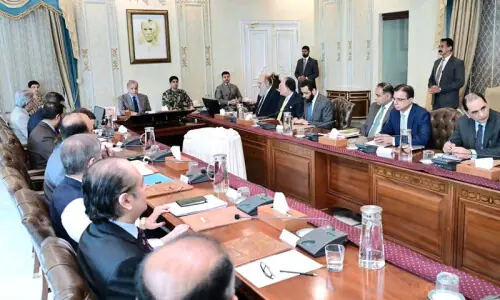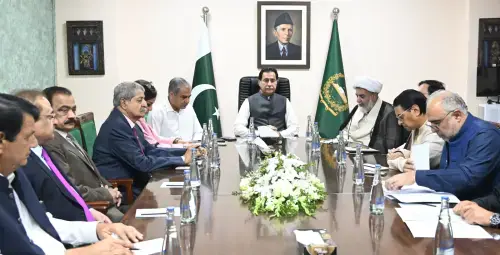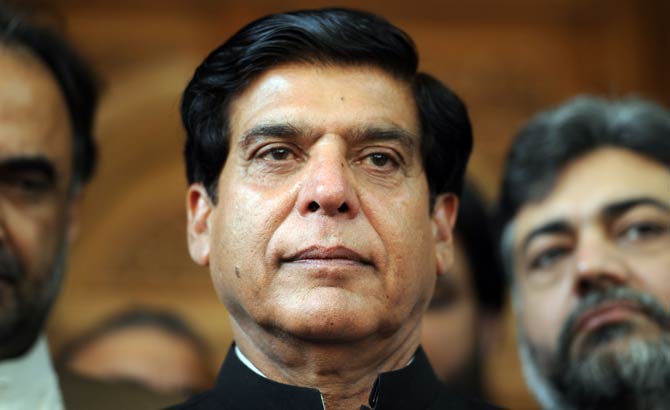
ISLAMABAD: Prime Minister Raja Pervez Ashraf Friday urged national security institutions to further improve intelligence gathering and establish effective coordination among civil and military institutions to comprehensively tackle terrorism.
“We have to redesign and redefine our military doctrine to achieve this objective,” he told participants here at a ceremony at the National Defence University.
The prime minister said the threats to Pakistan’s national security stem mainly from non-state actors who were targeting the state’s symbols and institutions in a bid to impose their agenda.
He described the enemy as ‘name-less and face-less,’ and assured all possible support and resources by the government to counter these elements.
He also acknowledged the sacrifices rendered by the security forces, law enforcement agencies and citizens in the war against terrorism.
The premier said that no military action alone could succeed and that political will and support of the people were critical to its success.
“The entire nation and Pakistan’s Parliament stand behind their armed forces in their struggle to secure the future of our children”, he said.
“Political stability is critically linked to national security,” he added.
A new concept of national security
The prime minister said the national security today has become a very complex and multi-faceted concept and the world was undergoing dynamic changes, with traditional notions of security and sovereignty being constantly redefined.
“There is a need to come to grips with the implications of this flux in intra-state and international relations,” he said and added that effective pursuit of national security goals requires developing a strategic framework which encompasses all elements of national power.
He said the key imperatives of a comprehensive national security paradigm include sustainable socio-economic growth, political sovereignty and stability, rule of law, food security, stable state institutions and technological advancements.
Prime Minister Ashraf said the forces of 'doom and gloom' thrive in an environment of chaos, uncertainty and instability.
“We need to guard against all such forces which are out to derail the system,” he said. “This is where the role of media comes in. They will have to build consensus on broad contours of national security.”
He said the threat of terrorism and extremism also involves a clash of ideas and battle for hearts and minds. “This war is also psychological. We have to expose the hollowness of this regressive mindset,” he added.
“We will defeat the forces of darkness who cast evil designs on our culture, values and a way of life. I have no doubt about it”, he said.