0
0
KARACHI, Jan 6: Pakistan share prices jumped nearly 50 per cent last year in a staggering development that belies major problems in an economy where falling foreign exchange reserves and turmoil could spell trouble in 2013.The Karachi Stock Exchange’s benchmark KSE-100 Index reached a record 17,031 points during trading on Dec 31, 2012, raising hopes among dealers for better prospects in the new year.Average daily volumes rose from 79 million shares in 2011 to 173 million shares in 2012, rising in value from $40 million to $50 million.
“Pakistan’s total return has been one of the best performing markets in the world,” said Mohammad Sohail, who heads brokerage firm, Topline Securities.
By the end of 2012, trade on the KSE-100 was bettered by only Caracas, Istanbul and Cairo.
Mr Sohail attributed the growth to a 4.5 percentage point decline in interest rates in the past 18 months, from 14 to 9.5pc, which he said had boosted earnings and encouraged funds to flow from government securities into equities.
But other experts warned that the boom was an oddity “engineered by local giants” given the worrying state of the economy dogged by violence.
On Jan 1 and 2 stocks lost 2.46pc – the worst fall in 14 months – which analysts attributed to the start of potential turbulence linked to the approaching general election.
“The rise in the KSE-100 is... not supported by any significant foreign inflows. It is a manoeuvred boom,” said independent economist A.B. Shahid.
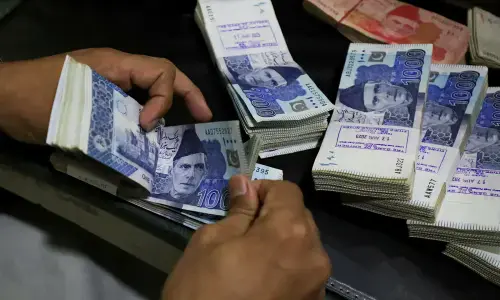
Last year, he said the Pakistani rupee depreciated eight per cent against the dollar and it was still under pressure because of depleting forex reserves.
In November 2008, the IMF bailed out Pakistan with an $11.3 billion loan package to stave off a balance of payments crisis. But Pakistan abandoned the deal in 2011, refusing to carry out strict financial reforms.
It has since paid back more than $2bn and owes $6.3bn between February 2013 and September 2015, according to an official at the State Bank of Pakistan.
But analysts say the repayments strain the rupee and drain reserves, which neither remittances nor US payments for services against terrorism in the form of a Coalition Support Fund can replenish.
Reserves held by the central bank fell from $12.8bn in January 2012 to $9bn in January 2013. Pakistan last week received $688 million from Washington under the CSF.