0
0

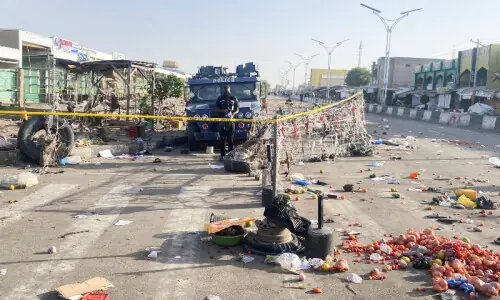
BEIRUT: The death toll from two massive blasts that ravaged the campus of a Syrian university has reached 87, anti-regime activists said Wednesday.
The Britain-based Syrian Observatory for Human Rights (SOHR) said the number of those killed in Tuesday's blasts at Aleppo University could rise even further because medics have collected unidentified body parts and some of the more than 150 injured are in critical condition.
It remains unclear what caused the blasts, which hit the campus as students took exams, setting cars alight and blowing the walls off dormitory rooms.
The opposition and the government have blamed each other for the explosions, which marked a major escalation in the struggle for control of Aleppo – Syria's largest city and once the country's main commercial hub.
Activists said forces loyal to President Bashar Assad launched two airstrikes on the area at the time of the blasts, while Syrian state media said a “terrorist group” – the government's shorthand for rebels – hit it with two rockets.
Either way, the explosions shattered the relative calm of the sprawling, tree-lined campus, signaling that Syria's civil war has reached areas that were mostly spared the violence that has killed more than 60,000 people and reduced entire neighbourhoods all across the nation to rubble.
The competing narratives about what caused the blasts highlighted the difficulty of confirming reports from inside Syria.
The Syrian government bars most media from working in the country, making independent confirmation of events difficult. Both anti-regime activists and the government sift the information they give to journalists to boost their cause.
The civilians stuck in the middle avoid talking to the media, fearing reprisals from both sides for speaking their minds.
Aleppo has been the focus of a violent struggle for control since rebel forces, mostly from rural areas north of the city, pushed in and began clashing with government troops last summer.
The university is in the city's northwest, a sector still controlled by the government.
Both activists and the Assad regime said those killed in Tuesday's blasts were mostly students taking their mid-year exams and civilians who sought refuge in the university dorms after fleeing violence elsewhere.
Activists said a government warplane carried out two airstrikes on the university. To support their claim, they circulated a video they said showed a small trail of smoke left by a jet.
They could not explain why the government would strike an area controlled by its forces.
“We have no idea why the plane hit there, but it was very clear that it was a plane that struck,” said an Aleppo activist reached via Skype who spoke on condition of anonymity due to security concerns.
Syria's state news agency said a “terrorist group” – government shorthand for rebels – fired two rockets at the university from an area further north. It did not give numbers for the dead and wounded.
The scale of destruction appeared inconsistent with the rockets the rebels are known to possess.
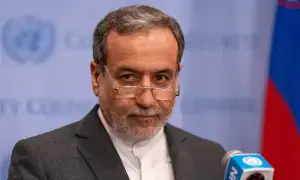
On Tuesday, Syria's UN Ambassador Bashar Ja'afari told a Security Council meeting on combating terrorism that “a cowardly terrorist act targeted the students of Aleppo University” as they sat for their mid-terms. He said 82 students were killed and 152 were wounded.
Syria's crisis began with political protests in March 2011 but quickly descended into a full-blown civil war, with scores of rebel groups across the country fighting Assad's forces. The UN said this month that more than 60,000 people have been killed in the violence.