2
2

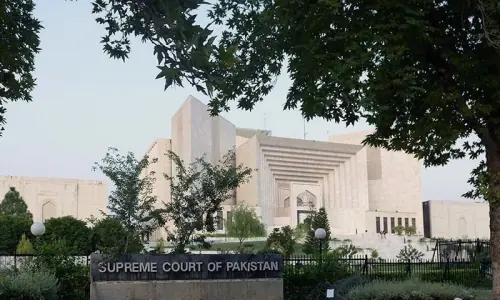
ACCOUNTABILITY of public officials has been in the news the past week and, as usual, for mostly the wrong reasons. First, the Supreme Court thundered about the lack of progress in prosecuting those involved in the rental power scam. The court’s timing may have left much to be desired but the basic point is correct: little has been done to move forward the investigation and prosecution of key individuals involved. Then, on Friday, an officer of the National Accountability Bureau tasked with investigating the scam was found dead in tragic and mysterious circumstances. Instead of trying to bring clarity to the events that led up to his death, the government appears to be attempting to obfuscate the facts. Bookended by these events was Tahirul Qadri’s sit-in in Islamabad where accountability of public officials was a central theme of the protesters. Again, while the timing of Mr Qadri’s sit-in was acutely questionable and many of Mr Qadri’s demands outside the constitutional framework, he certainly tapped into a vein of deep public discontent with the manner in which the state is being run.
Can this country progress towards an accountability mechanism that genuinely holds public officials to account, instead of the selective and politicised workings of NAB and the Ehtesab Bureau before it? Yes. The long delay in passing legislation to erect a new accountability framework and organisation notwithstanding, the pressure from the public and the media will eventually nudge the government and the opposition into action. When that action comes, however, the manner in which two key issues are addressed will effectively determine the fate of a new accountability mechanism.
First, the chief of any new accountability machinery should be selected through genuine bipartisan consultation. When Fasih Bokhari was appointed as NAB’s chairman, the government did the bare minimum to meet the legislative requirement of consultation with the opposition and then quickly installed its preferred candidate. Accountability is a non-starter as long as the government alone has the authority to appoint the accountability bureau or commission’s chief. Second, the accountability commission that is still in the stage of conceptualisation would need to have genuine financial and administrative independence. Under Gen Musharraf, NAB was made to work under the prime minister, while the present government has put it administratively under the law ministry. And lacking financial independence, NAB was quickly cut to size by the present government when its funding was slashed by 80 per cent. Without financial and administrative independence, the influence of the very people who are to be held accountable cannot be held at bay.