0
0
LONDON: The UN’s envoy on counter-terrorism and human rights launched an investigation on Thursday into the impact of drone strikes on civilians, aimed at securing accountability for attacks going “badly wrong”.
Ben Emmerson, a British lawyer and United Nations special rapporteur, said the huge expansion in the technology behind unmanned planes, and consequently their increasing use, required a new legal framework.
“The plain fact is that this technology is here to stay, and its use in theatres of conflict is a reality with which the world must contend,” he told reporters in London.
“It is therefore imperative that appropriate legal and operational structures are urgently put in place to regulate its use in a manner that complies with the requirements of international law.”
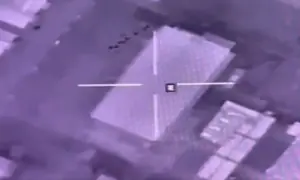
CIA drone attacks in Pakistan have killed up to 3,461 people since 2004, according to Britain’s Bureau of Investigative Journalism, up to 891 of them civilians including 176 children.
The UN envoy’s investigation will focus on 25 case studies of attacks in Pakistan as well as Afghanistan, the Palestinian territories, Somalia and Yemen.
Its main objective is to examine evidence that drone strikes can cause disproportionate civilian casualties, and come up with recommendations on the duty of states to investigate such allegations.
Mr Emmerson said his investigation was aimed at securing “accountability and reparation where things can be shown to have gone badly wrong, with potentially grave consequences for civilians”.
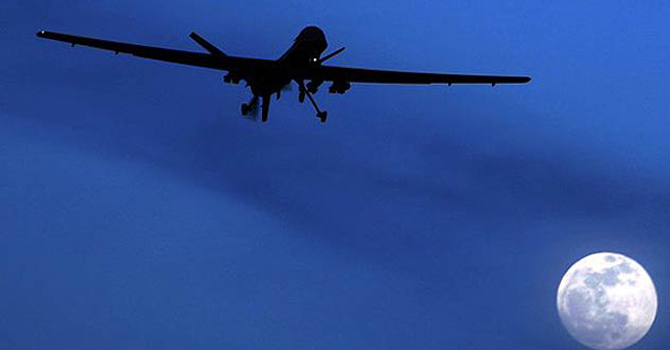
Official US figures show that Predator and Reaper drones in Afghanistan fired some 506 missiles in 2012, up 72 per cent on 2011.
But Mr Emmerson said the inquiry would not just focus on the United States and Israel, because 51 states now had the technology to carry missiles on drones.
He said he could imagine terror groups getting their hands on drones in the “not too distant future”.
Highlighting the problems, Mr Emmerson said the legal situation in Afghanistan, where there was a recognised international armed conflict, was very different to the Palestinian territories.
In Yemen, it might be considered that there was an internal armed conflict in some parts of the country but not in others.
The 25 case studies would be examined to see if there was “a plausible allegation of unlawful killing that should trigger the international law obligations to investigate”, Mr Emmerson said.
He would then put any allegations to the relevant states for a response before reporting to the UN General Assembly in October. He said he would make recommendations for further UN action “if that proves to be justified by the findings”.
Mr Emmerson added that he was “optimistic” of receiving cooperation from Pakistan, Yemen, the United States and Britain.
Pakistan’s viewpoint
A spokesman for Pakistan’s foreign ministry told a news briefing that the investigation was part of a broader mandate given to Mr Emmerson by the UN Human Rights Council to examine possible violations of human rights in counter-terrorism operations.
Foreign Office spokesman Moazzam Khan said that Pakistan, along with some like-minded countries, had called for examining the targeted and extrajudicial killing, including through drone strikes, of civilians and non-combatants.
Mr Khan added that Pakistan regarded drone attacks as a violation of its sovereignty and territorial integrity. Such strikes, he said, had no legality and were counter-productive.
He said the issue had been a constant source of concern for Pakistan. “We have been communicating this to the US administration at every level,” said the spokesman.—Agencies