159
159


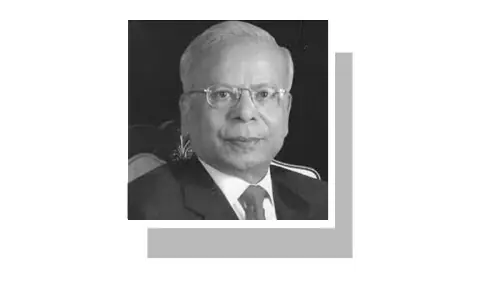
On a hot summer afternoon in 1940, a boy of 14 was rushing on his bicycle to his hometown near Jhang, part of present day Pakistan. He covered his head under a heavy turban because the barber had accidentally shaved off his hair.
When he reached the town, he saw people lined up on either side of the road, greeting him with loud cheers. The boy had earned a distinction in his matriculation examinations; the young genius had broken all previous records within the province, he was Abdus Salam.
Salam was born on January 29, 1926 in Jhang, then a small town in Punjab. After attending Government College, Jhang he went to Government College, Lahore in 1946 where he was awarded a masters degree in Mathematics, securing first place in the College with 95.5 per cent.

A wrangler in Cambridge
After his masters, Salam had two choices: Join the civil services or go abroad for further education. Luckily, he was offered a scholarship and instantly opted for the latter.
In 1946 at St. John’s College in Cambridge, Salam did his Tripos (BA honors) in just two years (the course usually takes three years) and because of this, he was given the title of ‘wrangler’ - a term given to students at Cambridge for obtaining first-class honours in the University's undergraduate degree in mathematics.
Salam was appointed as a fellow at the Institute of Advanced Study, Princeton University, USA In 1951, where he attended a lecture by Albert Einstein.
Author Zakaria Virk mentions a witty incident between Salam and Einstein in her book “Dr. Abdus Salam – Champion of Science in the Third World”:
“One day, when Prof Salam was studying in Princeton, New Jersey, he met Prof Einstein casually on the campus of the Institute for Advanced Study. Einstein asked him, ‘what kind of research are you doing?’ Salam replied, ‘I am working on the renormalisation theory,’ to which Einstein replied, ‘I am not interested in that.’ After a few moments of silence, Einstein asked the Pakistani, ‘have you studied my Relativity Theory.?’ Salam replied, ‘I am not interested in that.’”
The story of his doctoral thesis too is truly inspiring; he had taken up the complex task of eliminating infinities from the Meson Theory. Salam found a unique solution to this problem in just three short months! However, as per the regulations at Cambridge, he had to wait three years to receive his doctorate degree in 1952.
------------------------------------------------------
Back to PakistanWhile he was waiting to get his degree, Salam returned to Pakistan with the hope of serving his country. Upon his return, Salam was appointed the head of the Mathematics Department at Government College, Lahore from 1951-54. However, in that period with no research, minimal contacts or updated material to work with, Salam faced complete intellectual isolation.
In addition to this, neglecting Salam’s outstanding academic career at Cambridge and Princeton, his principal at the college advised him to put aside his research, offering him three substandard jobs: warden of the hostel, chief treasurer of the college or president of the football club. Resignedly, Salam took up the football club offer. However, this occurrence resulted in major disappointment for Salam, prompting him to return to Cambridge as a lecturer. He was the pioneer of the Theoretical Physics Department at Imperial College, London, where he taught from 1957 to 1993.
Back at Cambridge, he studied and interacted with PAM Dirac, Max Born, Wolfgang Pauli and other great minds of the time.
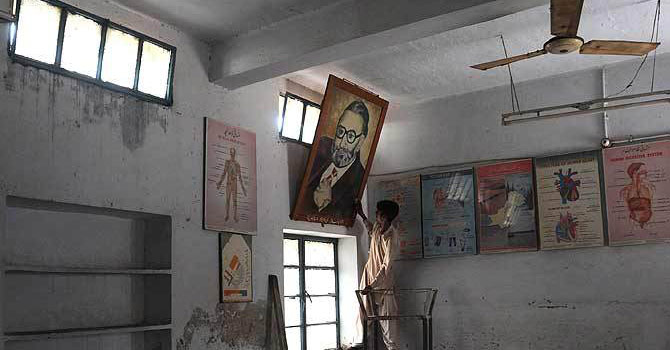
In 1959, Salam became the youngest Fellow of the Royal Society at the age of 33 years. The Royal Society is the oldest science association on the planet
During the 50s, Salam visited Pakistan often as an advisor on science policy to the government and in 1961 he was finally appointed as a Chief Scientific Advisor to the President of Pakistan. He laid the foundation of Pakistan Upper Atmosphere Research Commission (SUPARCO) and made remarkable contributions in creating a culture of science in Pakistan.
In 1973, at the Conference of Islamic Countries in Lahore, Salam presented a memorandum for the creation of Islamic Science Foundation.
The dream of ICTP
During a meeting at the International Atomic Energy Agency (IAEA), Salam proposed the Idea of an International Center for Theortical Physics (ICTP). He planned a platform for physicists from the developing world to stop the ‘brain drain.’
In his book Salam wrote, “The notion of a centre that should cater particularly to the needs of physicists from developing countries had lived with me from 1954, when I was forced to leave my own country. I realised that if I stayed there much longer, I would have to leave physics, through sheer intellectual isolation” (Ideals and Realities 3rd ed., World Scientific, 392, 1989).
Salam was interested to establish the centre in Pakistan. He also passed on this idea to President Ayub Khan. When Ayub Khan briefed his Finance Minister, Mohammad Shoaib, about the idea, the minister dismissively replied, “Salam wants to make a hotel for scientists rather than a centre.”
------------------------------------------------------
Unification of Fundamental ForcesDr Salam was often quoted as saying, “Progress, begins with the belief that what is necessary is possible.” With this spirit he presented the unification theory of electromagnetic and weak forces – the basic but very different forces of nature; he named it the ‘Electroweak Force.’

The theory predicted basic particles of W and Z bosons. The experimental stamp was put to theory when Carlo Rubbia discovered them in atom smashing machines at the Center for European Nuclear Research (CERN). Rubbia was also conferred the Noble Prize in 1984 with Simon Van Der Meer for the discovery of the particles.
Despite being afflicted with Parkinson’s disease, Salam produced high level research papers until 1995. He worked on Chirality and its role in the origin of life, gravity, fermions, superconductivity, symmetry, proton decay and science and human development.
------------------------------------------------------

The Nobel Prize
In 1979, he shared the Noble Prize of Physics with US physicists Steven Weinberg and Sheldon Glashow. For the Nobel Prize ceremony, he wore the traditional Pakistani dress of shalwar and sherwani with a turban. He was also allowed to give his speech in Urdu.
------------------------------------------------------
ICTP and TWASBeside the unification of Physics, Salam had another passion; to unify humanity for science. He often said science is the common heritage of mankind.
In 1964, he setup a rendezvous for science called the International Centre for Theoretical Physics. And due to the laudable efforts of the Italian government, the centre still continues to do wonders in the beautiful city of Trieste. Unesco and IAEA also supported the effort for the centre which was set up to bridge the gap between the scientists of the south and the north. The ICTP mission statement says:
“Foster the growth of advanced studies and research in physical and mathematical sciences, especially in support of excellence in developing countries. Develop high-level scientific programmes keeping in mind the needs of developing countries, and provide an international forum of scientific contact for scientists from all countries. Conduct research at the highest international standards and maintain a conducive environment of scientific inquiry for the entire ICTP community.”
The center also offers strong scientific research and outreach programs, organising more than 60 international conferences, seminars and numerous workshops annually. Thousands of scientists and scholars visit the ICTP every year to avail the center’s travel fellowships as well.
Salam was the Founding Director for the ICTP from 1964 to 1993.
Apart from his passion for Physics, Salam also felt strongly about providing a platform for scientists from the developing world. He established the Third World Academy of Sciences (TWAS), also located in Trieste, for this very reason. TWAS supports scientists in the developing world through a variety of grants and fellowships.
Salam breathed his last in Oxford, England on November 21, 1996.
In an email to Dawn.com, world renowned physicist, author and professor of physics at the University of Texas, USA, Steven Weinberg said:

“As a graduate student, though I had not yet met Salam, I spent a good deal of time reading his papers on quantum field theory. So I was very pleased when he invited me to spend 1961-2 at Imperial College, where he was the leading theorist. We became friends and collaborators, and wrote a paper together (with Jeffrey Goldstone) that turned out to be pretty important. Of course, before and after that Salam did work of the highest importance in theoretical physics. Physicists in general, and I in particular, miss him greatly.”
------------------------------------------------------