0
0

Divorce unfortunately, still carries a stigma for many in Pakistan. Many divorced women have no option but to return to their parents’ home where they are sometimes seen as a burden. Only a few marry again. Or at least, that was the case a couple of decades ago.
Women from poor backgrounds, because of their limited means, are forced to make something of their lives. They have to struggle to earn for themselves, often bravely putting up with harassment and insinuations regarding their ‘characters’. More often than not, they are also hounded by ex-husbands.
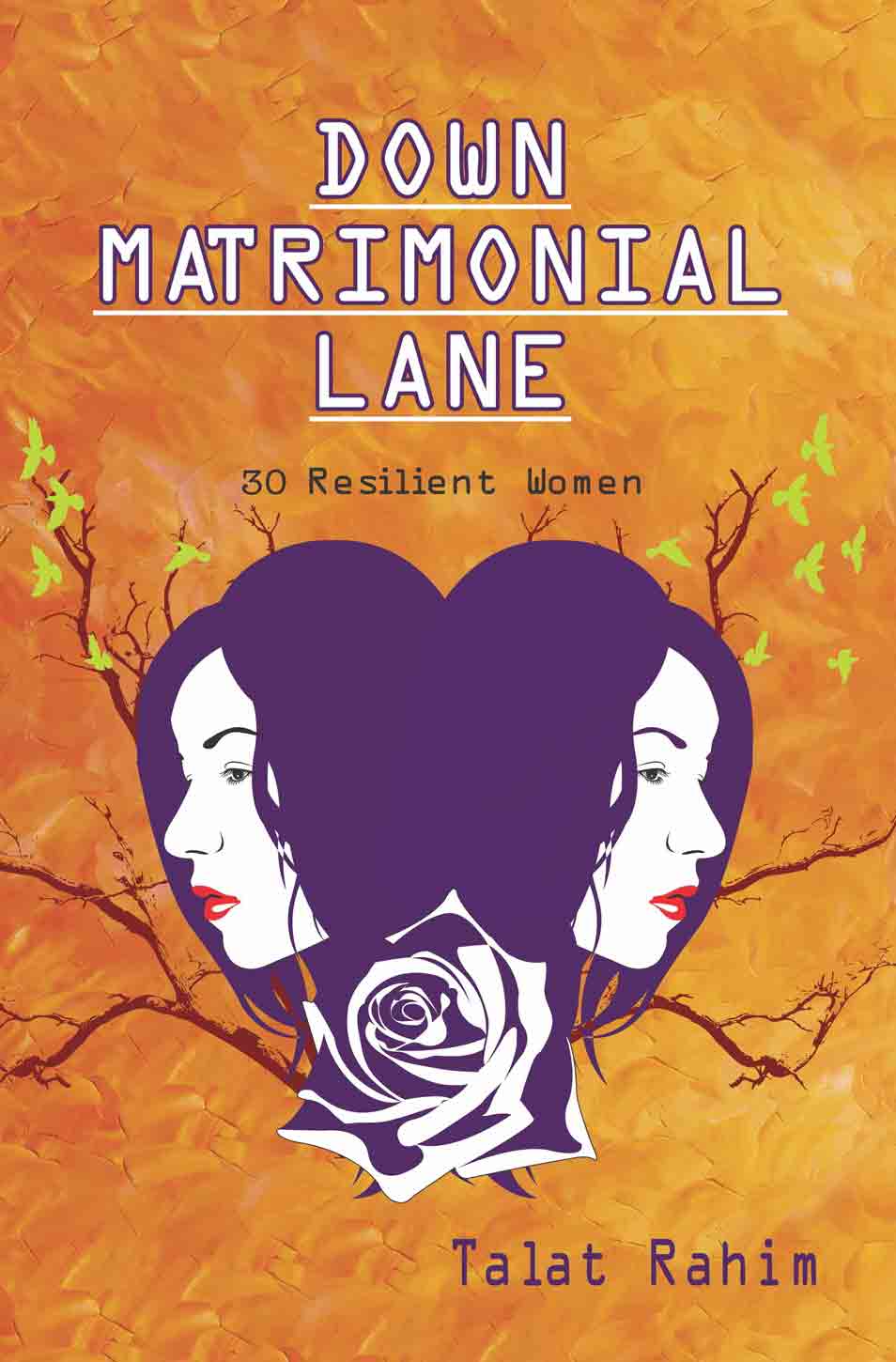
Talat Rahim wanted to tell the stories of women who survived bad marriages and opted to walk away rather than suffer abuse and humiliation. Down Matrimonial Lane: Thirty Resilient Women documents the tales of women who rebuilt their lives after leaving their husbands.
Down Matrimonial Lane is a brave book. It contains two kinds of men, the philanderer and the violence-prone. Our culture condones the lothario with a snide ‘boys-will-be-boys’ attitude and the wife-beater as culturally and socially correct. Down Matrimonial Lane reveals this stark, rabid misogyny of our society. The sad thing is that it is so rampant that it is sometimes also practiced by women in their role as the husband’s mother and/or sisters.
Shazia Hassan (all names are fictitious), one of the women whose story Rahim’s book narrates, was beaten by her husband while his mother watched with maniacal pleasure. A mother of 11 children, Shazia’s mother-in-law would “laugh hysterically” at her abuse; she may well have been subjected to the same treatment many decades earlier, yet she did not wish for things to change. The only time she intervened was when Shazia scratched her husband’s face.
In Down Matrimonial Lane, one reads of the man who married his second wife for her father’s political connections. When the government changed, he walked out on her and stayed away till her father came back into power. Politics and this man being what they are, when the father’s political party again fell from grace, he left her a second time without divorce to marry his third wife.
What is striking in the book is the toxic role played by the husband’s mother. She is often the one guiding her milksop son. However, as one marvels at the women, one cannot help but wonder what makes a grown man succumb to the marriage-destroying goading of a malicious parent. At the same time, these stories offer hope as the 30 women featured here turned their backs on bad marriages even when they had children and did not spend their days ruing the decision.
However, the one fault that some of the women protagonists can be blamed for is panicking about missing their matrimonial chances in their mid-20s. Some of them married out of sheer fear and desperation. But all the marriages documented here took place two or three decades ago and it is important to note that the situation for women has improved in this time. It is encouraging to note that professionally trained and upwardly mobile women are no longer bothered about marrying by a certain age.
Down Matrimonial Lane also shatters a pervasive myth, that Eastern marriages are successful by virtue of the couple remaining together. A lot of times, women simply put up with terribly unhappy situations, thus simply staying together should not be a criteria for success.
Rahim writes in a matter-of-fact, unpretentious style. There are no spicy scenes and no sermons or lessons. There are only stories which are very real and which many of us have seen unfolding within our families or among our friends.
Down Matrimonial Lane: Thirty Resilient Women
(SOCIOLOGY)
By Talat Rahim
Sang e Meel Publications, Lahore
ISBN 9693525876
229pp. Rs 895