0
0

KARACHI: With the recent arrival of 31 pythons at the zoo, the number of animals kept without a mandatory import permit at the facility has risen to 39, including four pairs of big cats, it emerged on Wednesday.
The customs department, which seized the consignment at Karachi airport, had given the reptiles to the zoo for safe-keeping till the importer acquired the necessary papers from the NCCW (National Council for Conservation of Wildlife). The import permit should have been acquired before the consignment was brought to the country.
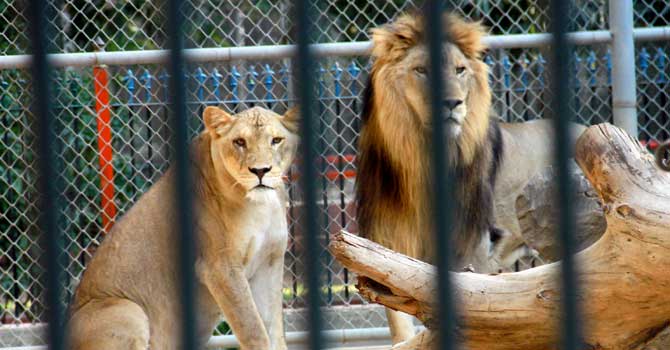
According to sources, two white lions and two Bengal tigers were purchased by the Karachi Metropolitan Corporation last year. However, the KMC has not acquired the mandatory import permit even after more than seven months.
The zoo has also got two pairs of lions brought in on an expired permit by an importer more than two years ago. The case, according to sources, is pending in the court which has issued warrants for the importer’s arrest.
At least in three cases animals were acquired through dubious deals by the KMC; a pair of puma was acquired by the zoo from a firm blacklisted by the NCCW while a pair of urial, a protected species under the Sindh Wildlife Ordinance, was acquired without a mandatory permit from the wildlife department. Both cases occurred last year.
The Safari park, also run by the KMC, is also keeping a pair of chimpanzees, which officials claimed, was given to the park by a ‘donor’. The chimps are listed as an endangered species in the International Union for Conservation of Nature’s Red List and is among the Appendix 1 species of the Convention on International Trade in Endangered Species. A key ‘importer’ of the KMC, they said, had also been given a lucrative contract for collecting visitors’ fee at the zoo.
Expressing concern over these developments, wildlife experts said the government-run facilities for keeping wild animals seemed to be encouraging wildlife trafficking and were fast becoming places for dumping illegally acquired animals.
“It appears that the zoo is becoming home to illegally acquired animals. Right now, the status of the animals is illegal as the KMC could not get the required import permit. The wildlife department would prepare a case in this regard and forward it to the NCCW,” said Hussain Bakhsh Bhagat, a conservationist heading the Sindh wildlife department, adding that the customs department should have declared the big cats illegal by now since it had confiscated the animals brought without an import permit.
“An import permit should be acquired before bringing in the animals and not the other way around. Acquiring an import permit after importing the animals is like making a theft legal,” he said.
Regarding the snakes, he said that all species of pythons were protected under the Sindh wildlife ordinance while the ones brought in were also protected under CITES.
“Besides, the most important thing in this matter is that the consignment has been brought without the mandatory import permit and, hence, we would recommend to the NCCW to blacklist the firm,” he said.
Mr Bhagat deplored that his department was not consulted on the python affair and the customs department handed over the consignment directly to the zoo.
“It’s an offence under Section 2 of the Sindh Wildlife Ordinance. Now, we are writing letters to both the customs department and the KMC,” he said.
According to Mr Bhagat, all wildlife consignments used to be handed over to the department in the past, which, he said, was the legal, standard procedure. However, the customs department was neither conveying relevant information at proper time nor handing over consignments for some months.
“What the KMC administrator did was also not right. He accepted the consignment, though he should have consulted us. We would take this matter to the highest level if it was not resolved,” he insisted.
“We might have released the reptiles into their habitat if the department had been consulted and it found the species were local.”
When contacted, Matanat Ali Khan, director-general of the KMC, said he did not have complete information about animal purchase.
“We had completed all our documents regarding the four big cats bought last year and sent them to the wildlife department for processing. But for some reason, the import permit couldn’t be issued. I can’t comment on its details at the moment,” he said, adding that the highest bidder got the zoo contract and it was likely that the importer might have applied under some other name.