ISLAMABAD, Feb 26: Peace activists visiting from India and members of the Pakistani media and the National Press Club discussed the menace of extremism here on Tuesday, with the former concentrating on the cross-border aspect of the problem and the latter more keen on tracing the causes and sources of India-Pakistan conflicts.
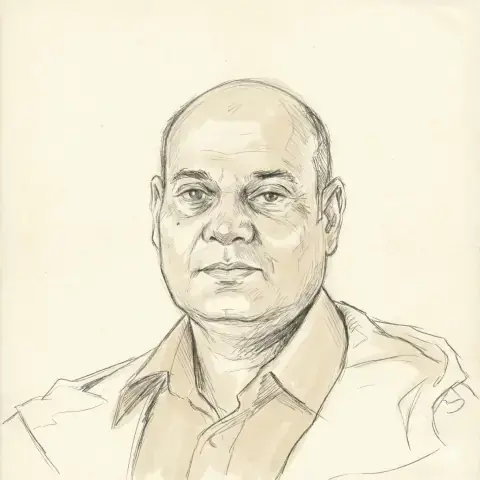
Bhopal-based journalist Lajja Shankar Herdenia, who is also the national convener of the All India Secular Forum, began by saying that the issues, problems and culture of India and Pakistan were almost the same. The citizens of both the countries, he argued, wanted peace and development, and constant war-mongering worked against their interests.
Herdenia chose to discuss only the Indian situation, particularly the Shiv Sena.
"We do not consider them representatives of Indian society," he declared, saying that the group had become involved in harassing non-Maharashtrians who move to the state for employment or other reasons. Mentioning Shiv Sena founder Bal Thackeray, who died in November, he accused successive Indian governments of "weakness" for not dealing with him.
"When the Shiv Sena and Bal Thackeray proclaimed themselves the flag-bearers of anti-Muslim riots or of the demolition of the Babri Mosque, they should have been dealt with. Bal Thackeray should have been arrested and tried," he said.
Numerous governments, he argued, have failed to combat groups like the Shiv Sena, and allowed them to survive and prosper.
"Ordinary people cannot fight these hooligans," he said, adding "we cannot leave everything to the government alone. Even in the government itself, there are people who benefit from these conflicts."
Herdenia was joined by Syed Mazhar Hussain, the executive director of the Confederation of Voluntary Associations. Expanding on Herdenia's argument, Hussain said he had carefully studied the history of India-Pakistan conflicts after 1978.
Many, he said, were instigated soon after major diplomacy efforts became serious.
"Most of the conflicts," he added, "have happened between September and January - and not because of weather conditions." Pakistan's fiscal year ends in June while in India's ends in March.
"After these conflicts, governments in both countries can come up with a general consensus to increase their defense budgets." India and Pakistan have both focused their foreign policies on weapons and conflicts, he argued, rather on the desires of ordinary citizens.
"People on both sides want trade and tourism," he remarked, adding that policy-makers should devote more effort to the protection of children, women, senior citizens, animals and the environment.
Amin Yousuf, the general secretary of PFUJ, took a more positive stance, saying the Pakistani media was vibrant and maintained a firm policy against exacerbating or glorifying conflict. "We have always supported people-to-people contact and cultural exchange," he said.
Herdenia agreed with this, and lauded the role the Pakistani media and civil society have played.
During his visit to Pakistan, he said, "I never saw anything in the media supporting the terrorists who caused carnage in Quetta. I will carry that message back to India."
He also celebrated the recent literary festivals in Karachi and Lahore, and, in particular, the active role of Pakistani women. During a recent visit to Karachi University, he said, he spoke to around 200 students, of whom around 85 per cent were women.