0
0

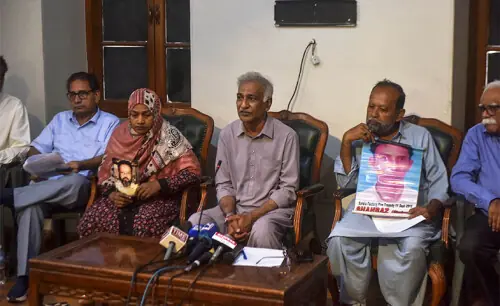
KARACHI, March 2: Though laws banning commercialisation of organ transplantation have brought about a significant positive change and unfair practices have declined by almost 80 per cent in the country, cadaver organ donation remains a big challenge and there is a dire need that all sections of society act together to promote the life-saving practice. These remarks were made by Prof Adibul Hasan Rizvi, director of the Sindh Institute of Urology and Transplantation, at a press conference held on the SIUT premises on Saturday.
The programme was organised by SIUT in collaboration with the Transplantation Society of Pakistan.
Cadaver organ donation, he said, was society’s immediate need as many lives were either lost or people were forced to compromise on the quality of their life only because the right organ was not available for transplant.
“Everyone has to die one day. But one can save 70 lives by donating one’s organs after death,” he said, adding that the city witnessed hundreds of accidents every year that included cases of brain deaths which could help in organ transplants.
He held medical professionals, media and civil society responsible for the slow progress on cadaver organ donation and said one must not find excuses for not donating organs since religion and religious people also supported the life-saving practice.
The enactment of the laws on organ transplant, he said, had increased the number of transplants in the country while at the SIUT transplants had dropped from 700 to 350 per year as now other health facilities were also offering the service.
Elaborating on the conditions for deceased organ donation, he said the patient could be on ventilator, declared brain dead or had suffered a sudden death.
Organs infected with acquired immune deficiency syndrome or hepatitis, he said, could not be transplanted unless the recipient was also suffering from the same disease.
Appreciating the Sindh Assembly for ratifying the Human Organ and Tissue Transplantation Law of 2010, he said Sindh had taken the lead in the country in ratifying the law aimed at increasing living and deceased organ donation and check commercialisation of organ transplantation.
The law, he said, was earlier passed by the National Assembly and subsequently signed by the president in 2010. With the passage of the 18th constitutional amendment that led to devolution, however, a need arose to ratify the law by provincial assemblies.
“The ratified law will enable any person who has signed his will to become an organ donor. In case there is no such declaration and the person has been declared brain dead, the living spouse or parents or adult members of the family are authorised to give consent to retrieve an organ for transplant at any medical institution or hospital duly recognised by the monitoring authority,” he said.
The scale of organ trade had been brought down but the practice was still going on in parts of Lahore and Rawalpindi under the nose of the government and law enforcement agencies.
Faisal Edhi, who was also present at the briefing, suggested that the government follow the example of other countries where governments had given the right to people to register themselves as cadaver organ donor and the same was mentioned in their driving licences.
Justice Majida Rizvi, a member of the SIUT evaluation committee, said the law imposed severe punishment on anyone found indulging in human organ trade. The imprisonment could be up to 10 years and the fine to Rs1m.
Dr Manzoor Hussain representing the SIUT said that deceased donor transplant was quite common in conservative countries like Iran and Saudi Arabia and it was unfortunate that Pakistan was yet to make a beginning.“Only four cadaver organ transplants have so far been carried out in the country. More than 200 cadaver organ transplants are carried out in Iran annually. Every organ is transplanted in neighbouring China,” he said.
Institutes for urology and transplants, he said, had been set up in Gambat while more were being constructed in Benazirabad district.