10
10

Election manifestos have rarely been given much importance in Pakistani politics.
Many of the regimes that have ruled Pakistan have been unelected: For them, manifestos were never important because they never had to contest elections.
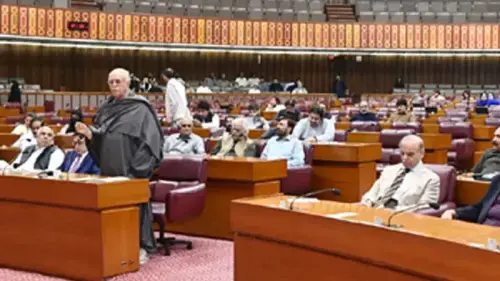
Now, for the first time in Pakistan’s history, one civilian government is to complete its complete five year tenure and another is to take its place, via a smooth system of transition.
Within this larger scenario, as elections draw closer, parties are now considering their stance on issues that can help them win or lose votes – the energy crisis, the economy, education, human rights, terrorism, law and order, etc.

In the meanwhile, 2011’s biggest entry on the political landscape, Pakistan Tehreek-e-Insaf, made a grand statement via its platform for change.
For many, it was the issues being raised by Imran Khan and his party that were important, rather than how ‘electable’ Imran Khan himself is. Corruption and drone strikes in particular have faced Imran’s wrath in many rhetorical speeches.
But this is what this debate comes down to: Does this rhetoric actually translate into concrete manifestos? How many parties have actually come up with specific, realistic proposals for change?
Pakistan’s faltering economy, increased sectarianism, spiralling violence and crippling power shortage cannot be resolved by loudly proclaimed intentions, or written documents, alone. Manifestos much show some level of technical know-how and expertise.
An even more thought-provoking question for our readers: Do manifestos even matter when Pakistan is completely dominated by personality-based, rather than issue-based politics? That much is obvious from a number of things.
Firstly, political parties are dominated by certain families. It’s the name and legacy of candidates that arguably help propel them to victory – whether it’s the Pakistan Peoples Party, Pakistan Muslim League-Quaid, Awami National Party or PML-N, family members tend to dominate power structures within parties.

Secondly, the amount of horse trading and ‘jumping ship’ that takes place, especially of late, shows that the political process in Pakistan is dominated by ‘realpolitik’ rather than ideology.
In this scenario – how important are manifestos? What can help Pakistan move towards issue-based electioneering rather than traditional feudal loyalties, for example?