0
0

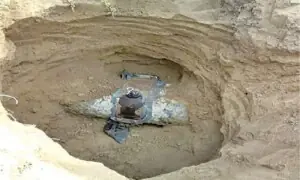
TAXILA, March 10: A team of scholars and students from the Taxila Institute of Asian Civilization (TIAC) discovered rare objects, including coins and a monastery, during excavations near Taxila.
“The discovery of the new monastery dating back to the 3rd to early 4th century AD would add a new chapter to the archaeological history of the site as well the Gandhara civilisation,” said Prof Dr Mohammad Ashraf Khan, the director of TIAC, who headed the team.
Talking to this correspondent, he said the monastery was constructed around later period of 3rd century to early 4th century AD. Another remarkable recovery is five copper coins related to the Kushan period.
Dr Khan said these coins would be shifted to the TIAC and after proper study complete information about it would be revealed.
The excavation team also recovered a headless Buddha in mediation which was made of stucco; 10 pots, pottery items, iron nails, animal bones, knives, iron pieces and bangle pieces.
These materials also suggested that fresh facts relating to the Gandhara culture have surfaced and this would need rewriting of the history of Taxila.
He said the bowl handle, knives and iron nails were the proof that the inhabitants of that dynasty were well aware of the significance and importance of the metals and they were fully equipped with the tools to model these metals.
He said the discovery of the pieces of bangles suggested that the women of that time had the tradition of wearing ornaments. The discovery of bones shows that the people of that era kept pets, he added.
Dr Khan said it was the third season of the TIAC to conduct the excavation during which 22 scholars conducted archaeological excavations.
He said although the site remained victim of digging by illegal treasurer hunters he was still optimistic about a major discovery.
He added that the TIAC in collaboration with the KP department of archaeology and museums and financial assistance from the Higher Education Commission had initiated the excavation and preservation project at the Buddhist Stupa and monastery in search of buried antiquities.
Sundas Aslam, a student of TIAC, said field work was quite different from classroom lessons.
She said excavations, preservation and documentation of the site and antiquities in the field was a thrilling job and only the Taxila Institute of Asian Civilization provided its students such practical opportunities.
Syeda Tahira, another student, said carrying out excavations at ancient sites was a unique experience which took her to thousands of years back.
She said the field work at Taxila opened new horizons of archeology to her which could not be provided at any university campus.