NA passes bill prohibiting corporal punishment for children

Published
0

– Dawn File Photo

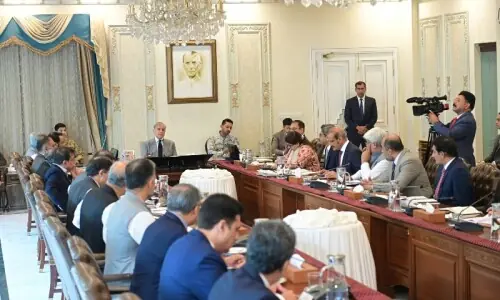
ISLAMABAD: The National Assembly on Tuesday unanimously adopted a bill providing up to one-year imprisonment and up to Rs 50,000 penalty for the person found guilty of inflicting corporal punishment on children.

The bill was moved by Attiya Inayatullah, which was later passed by the house.

According to the objects and reasons, the bill is aimed at protecting dignity of the children as human rights.

It says that the corporal or physical punishment is common and rampant in local schools and is also found in care institutions. Moreover, it is also used as form of showing control, intimidation and authority.

“For children, life is never easy of fair, therefore, within the institutional framework of the classroom, corporal punishment must be banned and replaced with constructive and communicative approach,” the bill states.

Similarly, in child care institutions, corporal punishment can become a form of abuse and the bill would ensure elimination of corporal punishment.

Opinion

Editorial

A voice in care
10 Oct, 2026

A voice in care

WORLD Mental Health Day this year carries a compelling message. The theme, ‘Lived experiences heard: real voices,...
Midterm break
Updated 10 Oct, 2026

Midterm break

Both the US and Israel need to halt their destructive misadventures in the Middle East.
American barbarism
Updated 10 Oct, 2026

American barbarism

WITH the spectre of defeat in the upcoming midterm elections looming large over the Trump administration, the...
Beneath the surface
Updated 09 Oct, 2026

Beneath the surface

The recent round made fewer headlines because the hard bargaining over the budget had already been done.
Moscow disagreement
Updated 09 Oct, 2026

Moscow disagreement

Both the Taliban’s denialism, and Russia’s apparently soft stance towards the Afghan terrorism problem, are unfortunate.
Vanished girls
09 Oct, 2026

Vanished girls

THE scourge of female disappearances in Pakistan should be a matter of shame. Institutional reforms and ...