2
2

ISLAMABAD: Despite growing loadshedding countrywide and an injection of over Rs1.4 trillion into the power sector over the past five years, the government failed to show any sense of urgency in resolving the electricity crisis, which now poses a threat to the country’s financial system and economy.
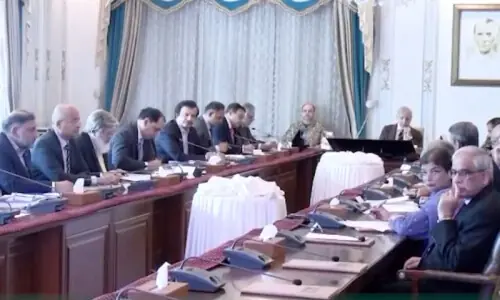
This is the crux of a report compiled by the National Assembly’s Special Committee on Energy Crisis led by Usman Khan Tarakai. The non-partisan committee comprising lawmakers and ministers from the PPP and the MQM was constituted by the NA Speaker to look into reasons behind the crisis and propose steps to overcome it.
The committee suggested that fuel mix towards hydro, coal and gas plants should be improved to reduce reliance on imported fuel and true potential of Thar coal’s power generation should be clarified.
“The committee noted with concern that the government, especially the water and power ministry, had not shown any sense of urgency in resolving the power crises,” said the report submitted to the speaker.
It said immediate and definite steps were needed to stop the huge drain on the national economy before it overwhelmed the budgetary process and the financial system.
“The seriousness of the ministry of water and power is reflected by the fact that both the minister and the secretary have failed to attend a single meeting of the committee in the last 12 months,” the report said. The committee held more than 10 meetings since its inception in November 2011.
“The report is sort of a white paper against the outgoing government by some of its own ministers and senior lawmakers,” said a senior official.
The report said that all sectors of economy – domestic, commercial, industrial and agriculture – were being provided subsidies; currently, the power regulator allows an average tariff of Rs11.91 per unit but the average sale price charged by distribution companies is Rs8.81 per unit, showing the government is extending an average subsidy of Rs3.10 per unit.
The inherent losses in generation, transmission and distribution were such that about 84,700GWH electricity was produced last year but only 66,200GWH was billed to consumers. An additional loss occurred due to non-collection of 13 per cent of the billed amount and a further Rs120 billion were lost due to excessive system losses, non-collection of fuel charges due to court orders and late payment surcharge payable to IPPs.
SOLUTIONS: “Rebalancing of the power tariff to bridge the gap between the cost of generating a unit and its sale price, which has now grown to over Rs5 per kwh this year, was the only immediate solution to the power crisis; however the additional burden had to be placed on those who created additional demand and had the capacity to absorb the tariff increase,” the committee recommended. Every paisa one increase in the tariff will result in cutting annual subsidies by Rs1bn.
It also recommended creation of a ministry of energy by merging petroleum and power ministries to have an integrated energy plan on an urgent basis by optimum utilisation of domestic and imported resources and to encourage investment for power generation.