3
3

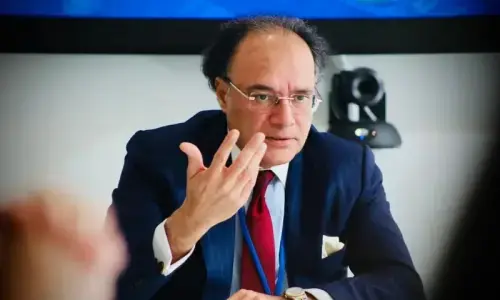
ISLAMABAD: Commerce Secretary Muneer Qureshi and his team briefed the military leadership on Tuesday about trade with India, with focus on the impediments holding up normalisation of business relations between the two countries.
A source in the defence ministry told Dawn that the briefing was given to the Joint Chiefs of Staff Committee. Gen Khalid Shameem Wynne, Chairman of the committee, presided over the meeting.
It was attended by Chief of Army Staff Gen Ashfaq Parvez Kayani, Chief of Naval Staff Admiral Mohammad Asif Sandila and Chief of Air Staff Air Chief Marshal Tahir Rafique Butt.
Islamabad had held out an assurance to New Delhi last year that it would open its markets for Indian goods by Dec 31, 2012, but stiff resistance by leading industrialists and the land-owning elite has ensured that the promise remains on paper.
Pakistan and India resumed trade liberalisation in April 2011 after a hiatus of over two years because of the Nov 2008 attacks in Mumbai.
Over the past two years, the two sides have made progress on different issues, the most important being the change from positive list-based regime to one based on the negative list. Pakistan has already raised the number of items that can be imported from India from 2,000 to 7,000 since March last year.
The opposition to trade with India is now mostly confined to textile, automobile and pharmaceutical industries.
An expert played down fears that removal of negative list and allowing trade through sea would affect the local industry. The domestic industries will feel the competition only if Pakistan allows import of all trade items through the Wagah border, he contended.
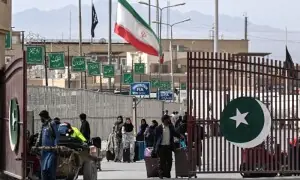
Farmers’ lobbies have been opposing the commerce ministry’s proposal to allow trade via the Wagah border. Currently over 100 items can be traded via that border.
On the positive side, the two sides have signed three agreements for removing bottlenecks in the smooth flow of trade, a revised visa regime, increased business-to-business interaction. In addition they have identified non-tariff barriers that come in the way of expansion in the volume of trade.