HAVING divided the political class and once again confused society with talk of talks, the TTP has now “suspended” its offer of negotiations with the government. Ehsanullah Ehsan, the TTP spokesperson, has claimed that the government’s lack of seriousness about negotiations with the Taliban is behind the TTP’s move. More realistically, the TTP has achieved much of what it set out to do by mooting the idea of talks. In the two craven multi-party conferences that took place in quick succession, the religious right and large segments of the political mainstream all but suggested that the state give up on the idea of Pakistan as a modern nation-state with a monopoly over legitimate violence and in which the citizenry enjoy freedoms and rights. Given that the TTP’s offer of talks coincided with a wave of militant violence, it never really appeared to be a meaningful offer.
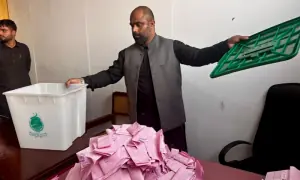
What the focus should switch to now is how best to secure the upcoming elections from militant violence. Ehsanullah Ehsan’s warning to the public to stay away from electoral activities is particularly ominous because the TTP has already made it clear that it regards elections as un-Islamic and that it will target “secular” politicians during the campaign. The mere threat of violence by the TTP is enough to potentially skew elections in parts of the country because both the voter and a certain kind of candidate in areas such as Fata and parts of Khyber Pakhtunkhwa, Balochistan, Punjab and Karachi may opt to stay at home, opening the door further to pro-Taliban political forces that will be able to campaign and vote more freely. If the TTP is to be stopped from indirectly shaping the composition of the elected assemblies, a comprehensive security plan must be drawn up — one that will require close cooperation between the Election Commission of Pakistan, the caretaker governments and security apparatus.
Securing the election from militant threats is neither beyond the realm of possibility nor something we can afford to overlook. True, elections by their very nature present a plethora of potential targets to those bent on violence and there is a trade-off between security and openness. But the stakes are too high to let a business-as-usual attitude prevail. The ECP, already burdened with a number of duties and crises, needs to put security near the top of the list of its priorities — and win the cooperation of the necessary institutions as quickly as possible.