0
0

Day 2: From Kot Radha Kishen to Nankana SahabLocations: Kot Radha Kishen, Bhai Pheru, Morr Khunda, Adda Mangtanwala, Nankana Sahab
(Click on images and videos to enlarge)
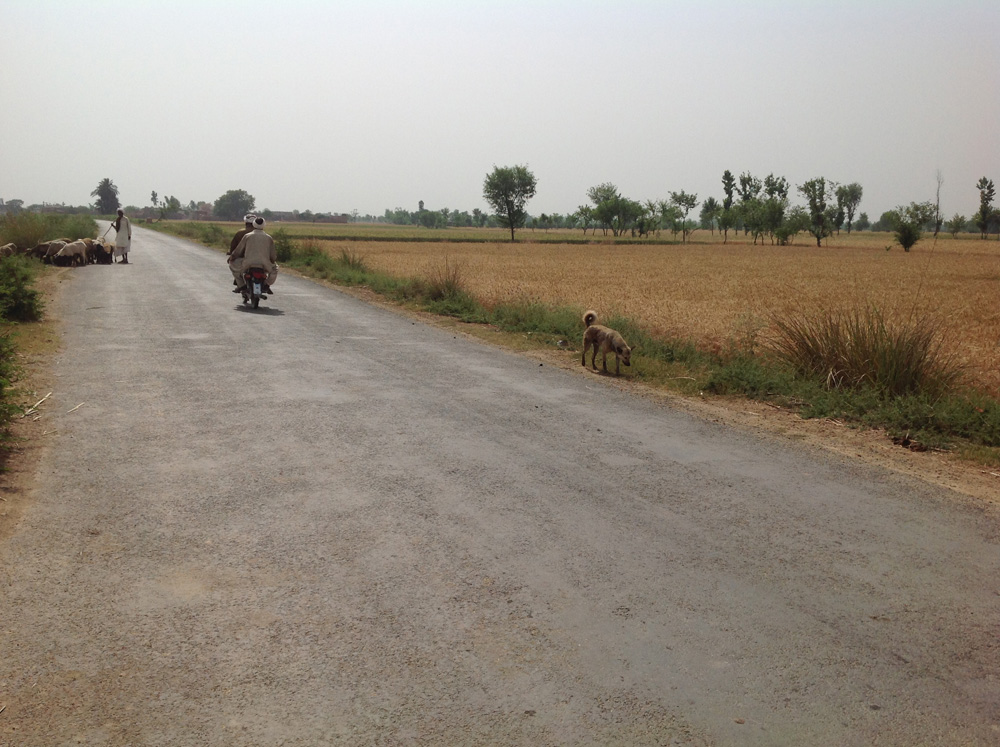
From Kot Radha Kishen, I took the inner village roads passing by Chak 54, Jalhar Abdul Qadir and Bhagiana Kalan. The good thing about these roads is that there is very little traffic. I was wondering that I might have come across fewer vehicles in today's 74 kilometres, than I do in my daily four kilometers lap from home to the office in Lahore.
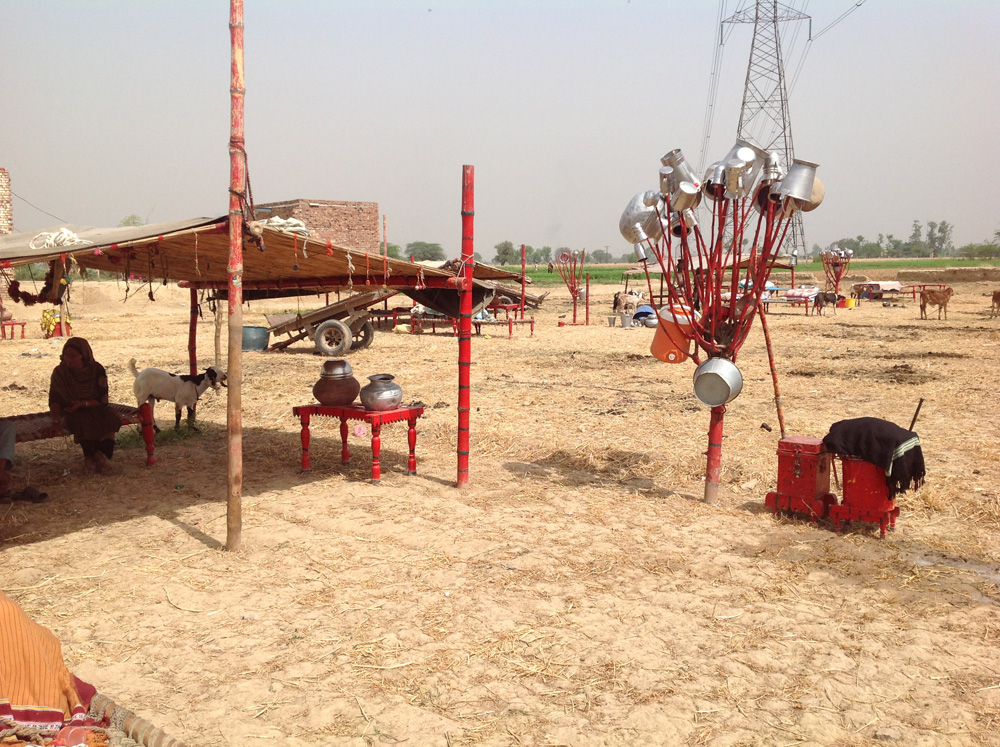
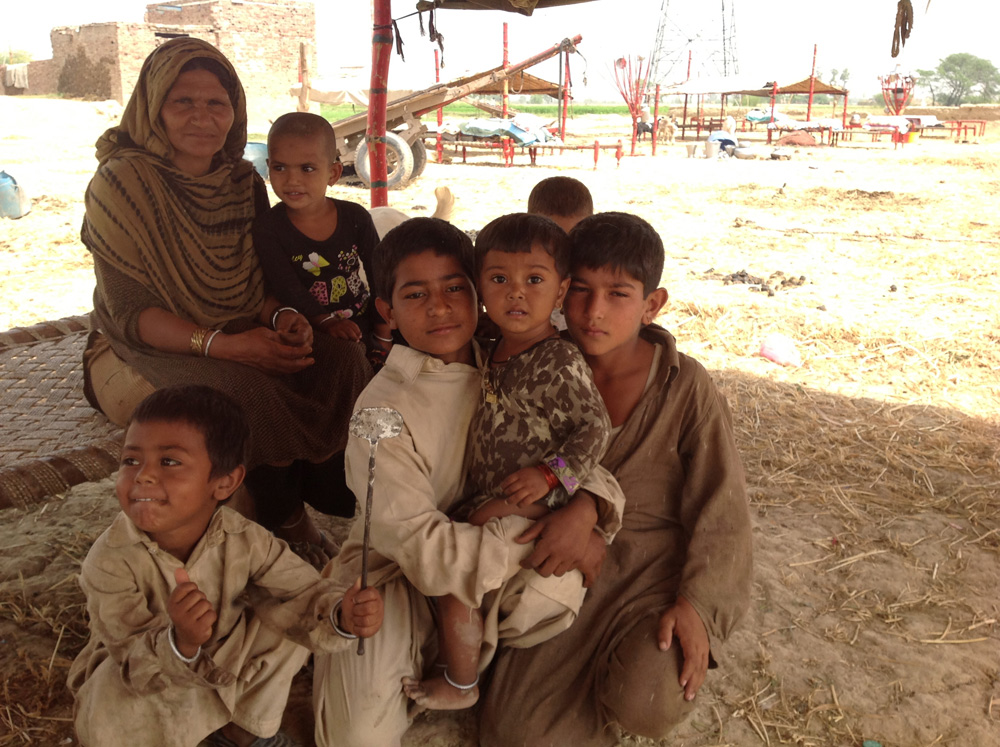
Gypsies fascinate me. I have always wanted a closer look at their life but was always confined behind the window of the vehicle I rode. For once though, I am free. So when I saw a settlement on my way, I stopped to talk to them. All the men had gone to graze the herd. The few women left behind were busy with their daily chores, as their children roamed around the young calves.
They were apprehensive of talking to a 'strange' stranger. An older woman agreed to talk to me. She told me that they were ethnically a Baloch tribe that moves on a route in this part of Punjab and stays wherever there is fodder available for their animals.
They came to camp in this area from the Okara district. Wheat is being harvested all around and their cows graze over the crop residues, the leftover greenery. This pruning helps the farmers clean and prepare the land for the next crop, so they happily allow them. A milk buyer follows them and collects their daily produce in returned for cash.
She wasn't, however, quite as forthcoming about my questions about the upcoming elections and I didn't want to hold her up for too long. So, maybe another time, another place, I will get to know them better. But as a matter of law, if you do not permanently reside at a place, you don't have voting rights.
In the main bazaar, Bhai Pheru, the PML-N candidate for the provincial seat, Rana Iqbal is called Speaker Sahab. Any elevation in the status of their representative becomes a matter of pride for the constituents. "Does it give him an edge over the rival," I asked a samosa wala. He shook his head in the negative but then made it conditional, adding, only if he serves the people of his constituency in a better way. So the elevation must trickle down. He made me wiser telling me how busy he has been with his speaker-ship responsibilities; and that came at the cost of attention to his constituency.
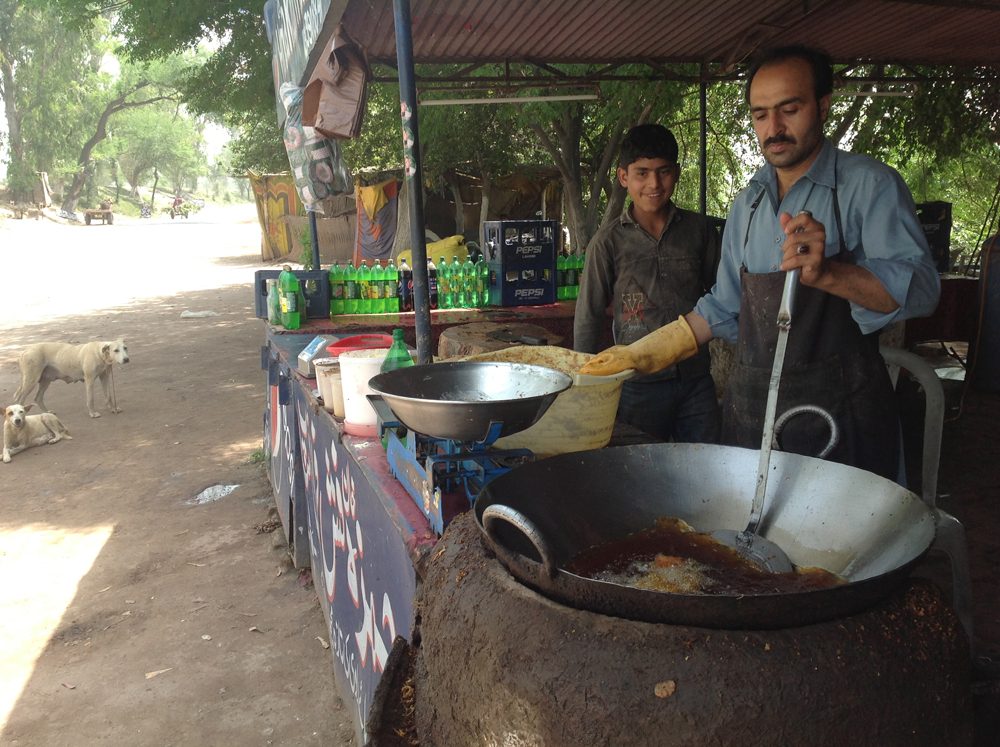
I had lunch at the Head Baloki where the fried fish kiosks are lined along the road. This man spoke Punjabi so fluently that I was shocked when he told me he was a Pathan, whose family migrated from Mardan some two decades ago. Besides this business, they engage in contract farming. The larger family still extends into the Peshawar valley but they are fully naturalised here with identity cards and votes registered in the Kasur district constituency.
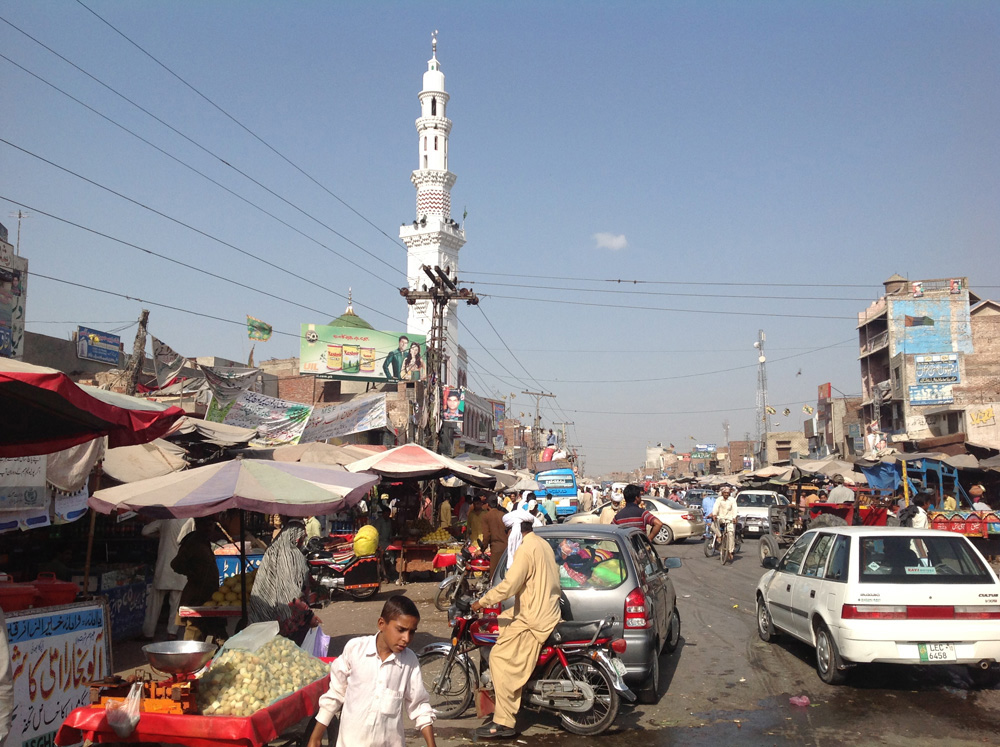
Morr Khunda wears its religion on sleeves. The signs are too visible not only in this small locality stretched along a kilometre long patch of road but also in surrounding villages. Amir Muawia Chowk and Ali Madad Street is how people identify their areas.
There are two large mosques at Morr Khunda, a stone’s throw from each other. One has an exceptionally high minaret that dominates this town's skyline. The green Dawat-e-Islami flags flutter atop every other building and religious sermons blare from a speaker installed on a bicycle parked at a busy junction. There is an Imambargah across the road as well that organises the 10-day mourning in Moharram, complete with a zuljinna.
There were, however, no signs of strife or tense relations between the believers of various sects and schools. The previous MPA from the constituency, PP 173 Nanakana Sahab 4, was a Shia and he could not win on the Shia vote alone. This is the evidence that the locals offer in support of the harmony that they claim to be living in.
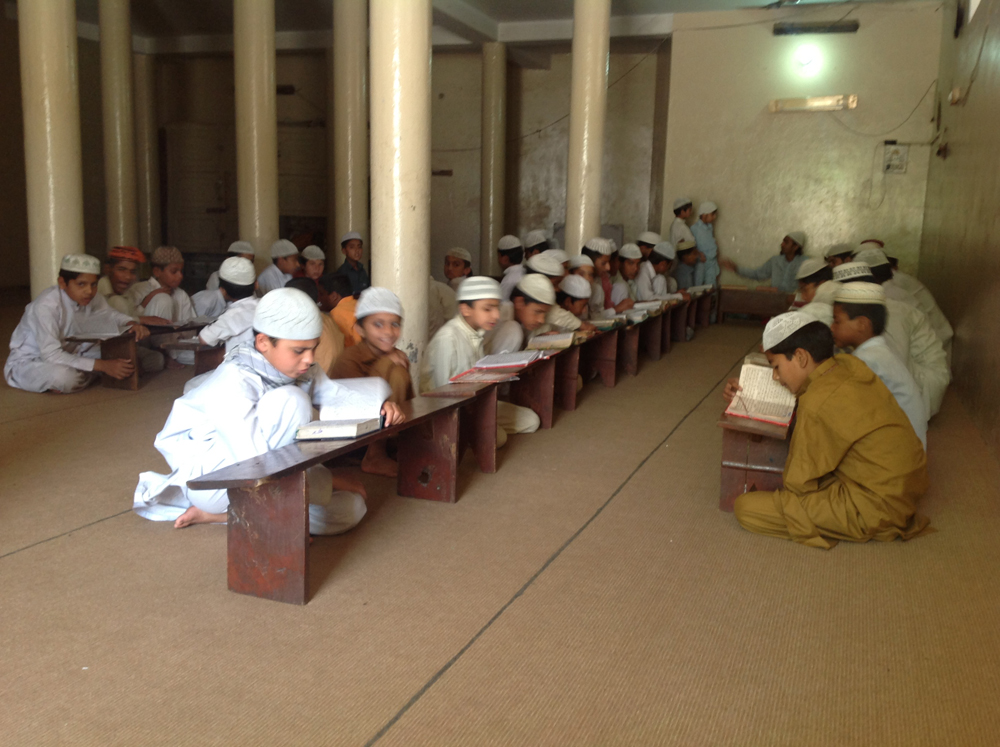
One of the religious complexes here is run by Nooruz Zaman Ovaisi. He is a gaddi-nasheen pir of Chaindpur. His complex includes not only a mosque and madrassah but a small hospital as well. It has a gynae and an eye ward and two ambulances.
Ovaisi has mixed his religious position with a philanthropic role in a very interesting manner and claims to have political influence as well though his followers are divided into two constituencies.
His Ovaisi Welfare Foundation believes that free education and free health are the basic responsibilities of the state that claim to be working under an Islamic doctrine and that his NGO's small efforts are a fill-gap arrangement.
I talked to him about the role of pirs in rural life and politics. Here is what he had to say:
Video: