RAWALPINDI: As Taliban bombs curtail campaign rallies, Pakistan's political parties are ploughing millions of dollars into TV and print adverts to sway voters ahead of next week's historic polls.
Competition is fierce but it's a cash market and those with the biggest bucks get the most air time ahead of the historic May 11 polls, set to mark a key democratic transition, say television executives on condition of anonymity.
Bursting with colour, promising to fix the nation's myriad ills, bust corruption and bring prosperity to voters, the “paid content” ads are broadcast day and night accompanied by the upbeat, nationalist jingle of campaign songs.
Unlike Internet access, which is still limited, more than 60 per cent of the 180 million population have access to TV, according to the Pakistan Advertisers Society.
For medium-sized channels, an average minute of advertising costs $460-500 during 6pm to midnight prime time or $250-300 earlier in the day, according to one television insider speaking on condition of anonymity.
There are around 80 channels in Pakistan, although the market is dominated by little more than a dozen with rolling 24-seven news coverage.
“On average a television channel airs up to five minutes of political ads an hour,” said the television insider.
The outgoing PPP gives prominence to former prime minister Benazir Bhutto, showing footage of her 2007 assassination and anointing her son Bilawal – still too young to contest the vote – as the country's future.
The main opposition and frontrunner PML-N lionises its leader Nawaz Sharif as a statesman and a developer, the man who knows how to fix the economy, the man beloved by a sea of flag-waving crowds.
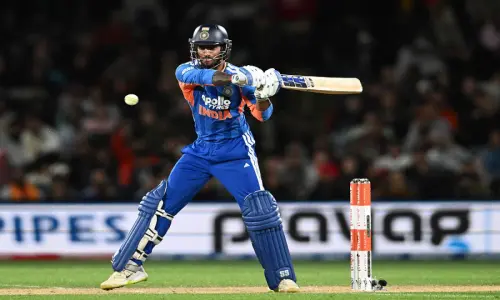
Ads for cricket star Imran Khan – looking to make a breakthrough at the May 11 polls – offer voters a “new Pakistan” with his PTI party symbol – a cricket bat – swiping away the corruption and jettisoning the country into the future.
With Taliban threats against the main outgoing parties, Khan and Sharif are the only party leaders to address traditional public rallies in person.
Ad men consider the election a two-horse race in which the PPP – rudderless without Bhutto and her son too young to run for parliament – has deliberately taken a backseat, consigned to a stint in opposition.
“It's PTI and PML-N who are the highest spenders,” said Bilal Agha, general manager for Dawn News television.
He said the Pakistan Broadcasters Association raised ad prices by 25 per cent and made political advertisements cash only. But the PPP is not doling out big money.
“I don't know where the strategy went wrong, or maybe they thought that the next five years are not theirs,” he told AFP.
Agha said his channel had no favourites.
“Whoever pays more, gets more,” he said.
But another TV journalist told AFP that his bosses were showing clear bias to Khan, ordering staff to cover all his public meetings and rallies, because PTI had paid so much money for ads.
“Special teams and the best equipment has been deployed for this purpose,” he told AFP on condition of anonymity. “When we cover other politicians and send reports, they are trashed,” he added.
Others say Sharif has an edge.
Recently a popular anchor of a private news channel quit her job saying she would not sell her integrity.
“This election in Pakistan, everyone – channels and anchors – is up for sale. I refuse to put a price tag on myself,” tweeted Sana Bucha.
For the first time, the election commission has capped spending on advertising in a bid to level the playing field between rich and poorer candidates, although there is no restriction on parties.
Any of the 4,671 candidates for the national assembly can spend up to 1.5 million rupees ($15,000) and the 10,958 provincial assembly candidates up to 1 million rupees ($10,000).
Streets across Pakistan have been festooned with colourful flags, banners and posters of different candidates with their leader's mugshots and party symbols.
Supporters have plastered cars and taxis with party stickers, a sort of drive-by publicity that reminds those locked in traffic jams or weaving down Pakistan's chaotic roads who they should be voting for.
Mohammad Faraz, manager of the Vital Lines printing house, denied print advertisements had lost ground to electronic media.
“People are not watching the television or listening to radio all the time, but they see these boards all the time when they leave home,” Faraz told AFP.
“We've been very busy for the last two months and most of us have not even had our weekends off. We're working 24/7,” Faraz said.