0
0

Reviewed by Zohra Yusuf
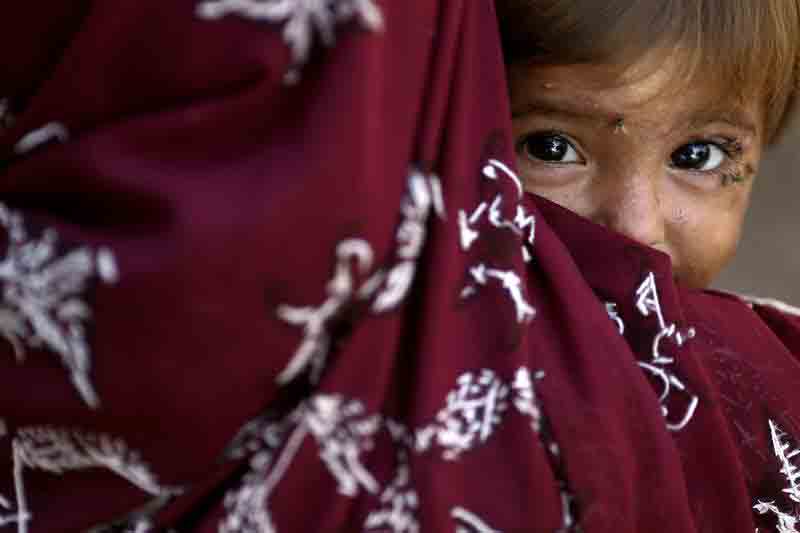
It is unlikely that Zadia Birru of Addis Ababa in Ethiopia could have met Dr Nafis Sadik, the subject of this biography, or even heard of her. Indeed, their lives couldn’t be more different. Yet Zadia’s story is one among many of the kind that motivated the Pakistani doctor to make women’s reproductive health her mission in life.
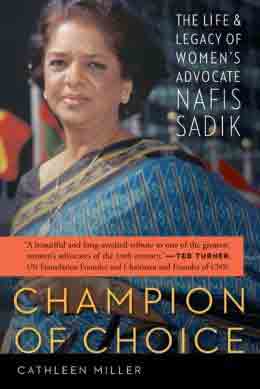
American journalist and writer, Cathleen Miller, has adopted an unusual approach to writing a biography. And it works. The chapters in Champion of Choice: The Life and Legacy of Women’s Advocate Nafis Sadik alternately cover Sadik’s life and the precarious reproductive health of ordinary women across the globe. What adds to the relevance of this approach is, of course, Sadik’s international status as a well-known advocate of women’s reproductive rights.
Many Pakistanis know of Sadik through her work at United Nations Population Fund (UNFPA) which she headed for a long period. However, surprisingly, little has been written about her life and work in the local media. This biography is, therefore, all the more welcome. It’s a comprehensive study of a woman who became a trailblazer at a young age and at a time when it was uncommon for young Pakistani women to seriously pursue a career. Born into relative privilege and into a traditional family, Sadik asserted herself at a fairly young age. The eldest of five children of Iffatara and Mohammed Shoaib, she showed determination of will and clarity of vision at an early age. She was fortunate in having the support of her parents — her father, in particular — and later of her husband, Azhar Sadik, who was an officer in the Pakistan Army. In fact, her husband’s position in the army contributed to her considerable experience of dealing with women’s health in various parts of the country.
Champion of Choice comprehensively covers both Sadik’s personal and professional lives. Starting her medical career by looking after the obstetric needs of the wives of officers and soldiers, Sadik only once took a three-month break from professional life to try being a housewife and socialite, a short sabbatical that convinced her that this role wasn’t meant for her. Her early exposure to the women who came to her with gynaecological problems and the attitude of their husbands deepened her resolve to work towards women’s reproductive health. As the author notes, in the ’50s, it was unheard of that men — particularly from the armed forces — would listen to the advice of a woman and that, too, one so young.
As the Sadiks crossed continents and frequently moved between Pakistan and the United States, the doctor continued to advance her own knowledge, enrolling twice at Johns Hopkins in Baltimore. She was eminently qualified to head the UNFPA when she was chosen to do so in 1987, following the death of Rafael Salas of the Philippines. While she is best known for this job, Sadik also served on Pakistan’s Planning Commission as well as the country’s nascent family planning programmes. Regardless of the position she held, she stood up to those denying women their reproductive rights, whether it was the Pope in the Vatican or George W. Bush in Washington.
Miller has demonstrated tremendous passion for her subject in travelling the globe, listening to women’s stories and talking to Sadik’s many childhood friends as well as family members. However, she can be faulted on two counts — firstly, the research on Pakistan. She writes “In 1971, when Ayub Khan was driven from office and replaced by Zulfikar Ali Bhutto (father of Benazir Bhutto), a more conservative era ensued. One of the leader’s first steps with the very visible family planning program was to make it fade into the background.” Apart from the chronological mistakes, Bhutto only turned ‘Islamic’ in 1977. In fact, in the mid-70s his government, in collaboration with the Family Planning Association of Pakistan, was all set to take a revolutionary step — the commercial marketing of contraceptives in Pakistan. It was General Ziaul Haq who pushed back Pakistan’s programme and the country is still feeling the repercussions. Other trivial inaccuracies prevail — such as a reference to Sheraton in the Lahore of the ’50s and Jinnah described as Pakistan’s president.
The other grouse I have is the breathless, gushy approach she’s adopted for a woman known for her professionalism. Champion of Choice has too many references to Sadik’s “Radha eyes”. Surely the doctor and the readers would prefer a more objective biography to something close to a hagiography.
The reviewer is the chairperson of the Human Rights Commission of Pakistan
Champion of Choice: The Life and Legacy of Women’s Advocate Nafis Sadik
(Biography)
By Cathleen Miller
University of NebraskaPress, US
ISBN 978-0-8032-1104-9
496pp.