0
0

By Nurjehan Mawaz-Khan
It is inspiring to be among luminaries that one only imagines through their works, and the throngs in attendance were a testimony to this. The young and the old were equally starry-eyed at the chance to interact with the masters of their craft.
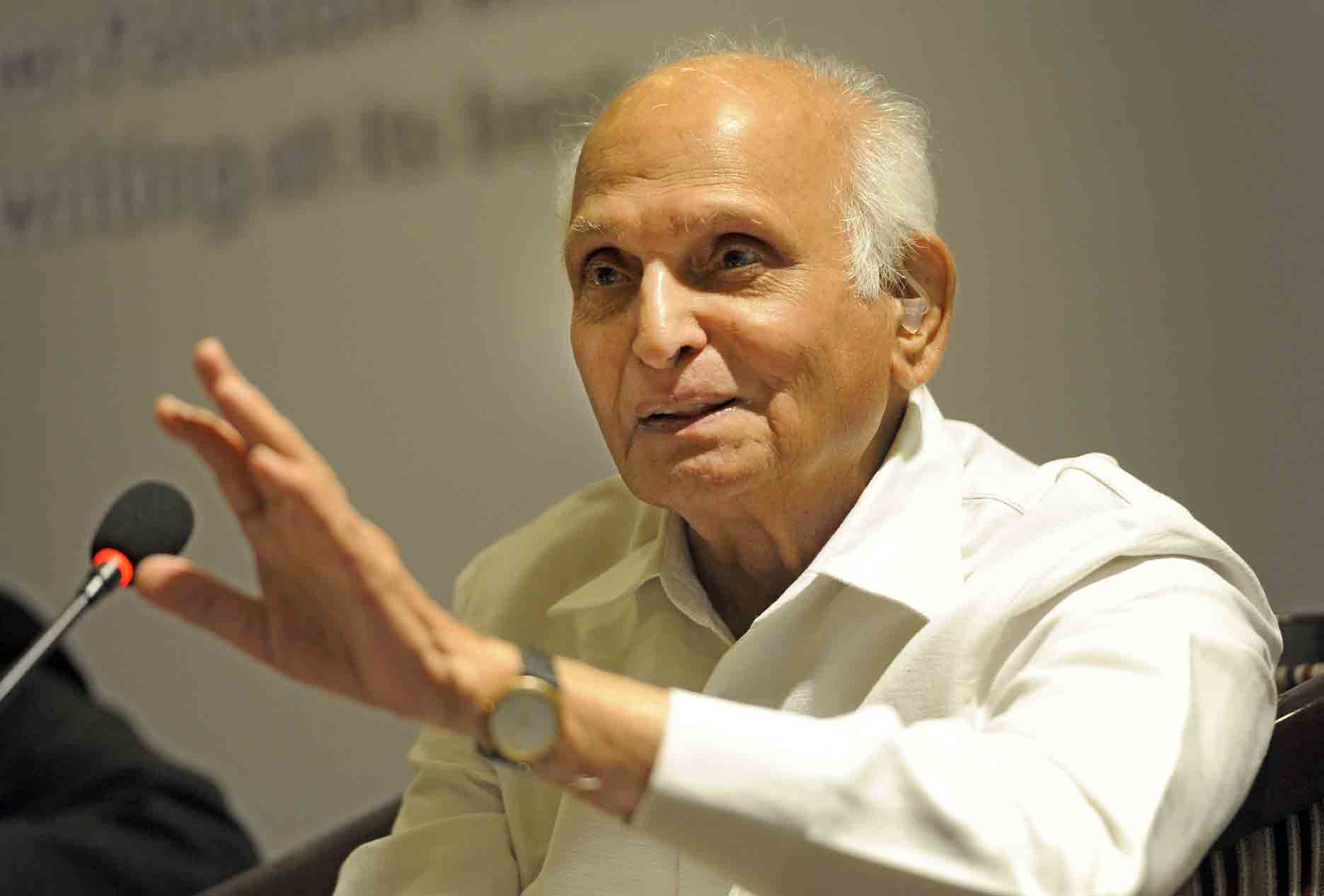
Among the stars of the Islamabad festival were Intizar Husain and Kamila Shamsie, both keynote speakers and nominees for prestigious international awards. Both also admitted to not knowing what specific course they follow when writing and encouraged new writers to stick to subjects they are unconditionally interested in.
Earlier this year, when Husain was informed of his nomination for the Man Booker International Prize 2013, he responded with a comment regarding the weather. Calling himself an “Urdu ka janwar,” Intizar Husain spoke beautifully about belonging to the last century. He talked about how the promise of modernity was in vain, as terrorism and warfare were rampant now more than ever before. Having mentioned some of the major milestones of the times, he said the people who walked on the moon had different ideas from Iqbal and Jinnah. What began as a new world of ideas and empathy, he said, was overrun by a new world of oppression. To this effect he spoke about Qurratulain Hyder’s characters who seem to have been transported in time from Karbala to the 21st century.
His phenomenological short story technique came about through an avid passion for reading, an incessant analysis of the times and places he lived in and the writing styles of others: a system of constant learning. Around him was the era of budding modernity, an age of realism, where having read (and being intrigued by) the likes of Bedi, Kamal Asif, Tolstoy, Dostoevsky, Premchand, Krishan Chander, Deputy Nazir Ahmed and Manto, he felt the day of the novel was over.
Husain cited his maternal grandmother, Buddha and Chekhov as his mentors. His nani taught him how to tell stories, he said, he considers Buddha to be one of the greatest short story writers, and Chekhov, who conveyed so much through so little, is a writer Husain said he still hopes to emulate. But where there is change and innovation, reservations and criticism trail not far behind. For a time Husain became involved in the post-Partition clash between the progressive and the conservative writers’ lobbies. And when Basti was published, the renowned poet, author and critic Ahmed Nadeem Qasmi is known to have been offended by Hussain’s analogy of monkeys portrayed as humans — God’s ‘greatest creation’ likened to animals — to which Farrukhi remarked that monkeys also seemed to have taken offence at the comparison. The matter was let go of, on the basis of the work being metaphoric in nature.
Husain maintained that literary critics, like all other critics who hold a sense of power that comes with judgement, are fickle in nature. Artists, he said, must stick to their own judgements and points of view, while perpetually moving forward with strong personal conviction, not only through perspective but also through their craft. The country has a strong history, its people should own it, he said. He also stated being unimpressed with both Shahab Nama and Bahishti Zevar, occasionally displaying his sense of humour.
The session also included readings from Husain’s works Basti and Raat. After the second reading, Farrukhi questioned whether it was written with the upcoming elections in mind, to which Husain frankly remarked that it must be a good piece of writing for it to still find relevance in the current psyche years after its publication.
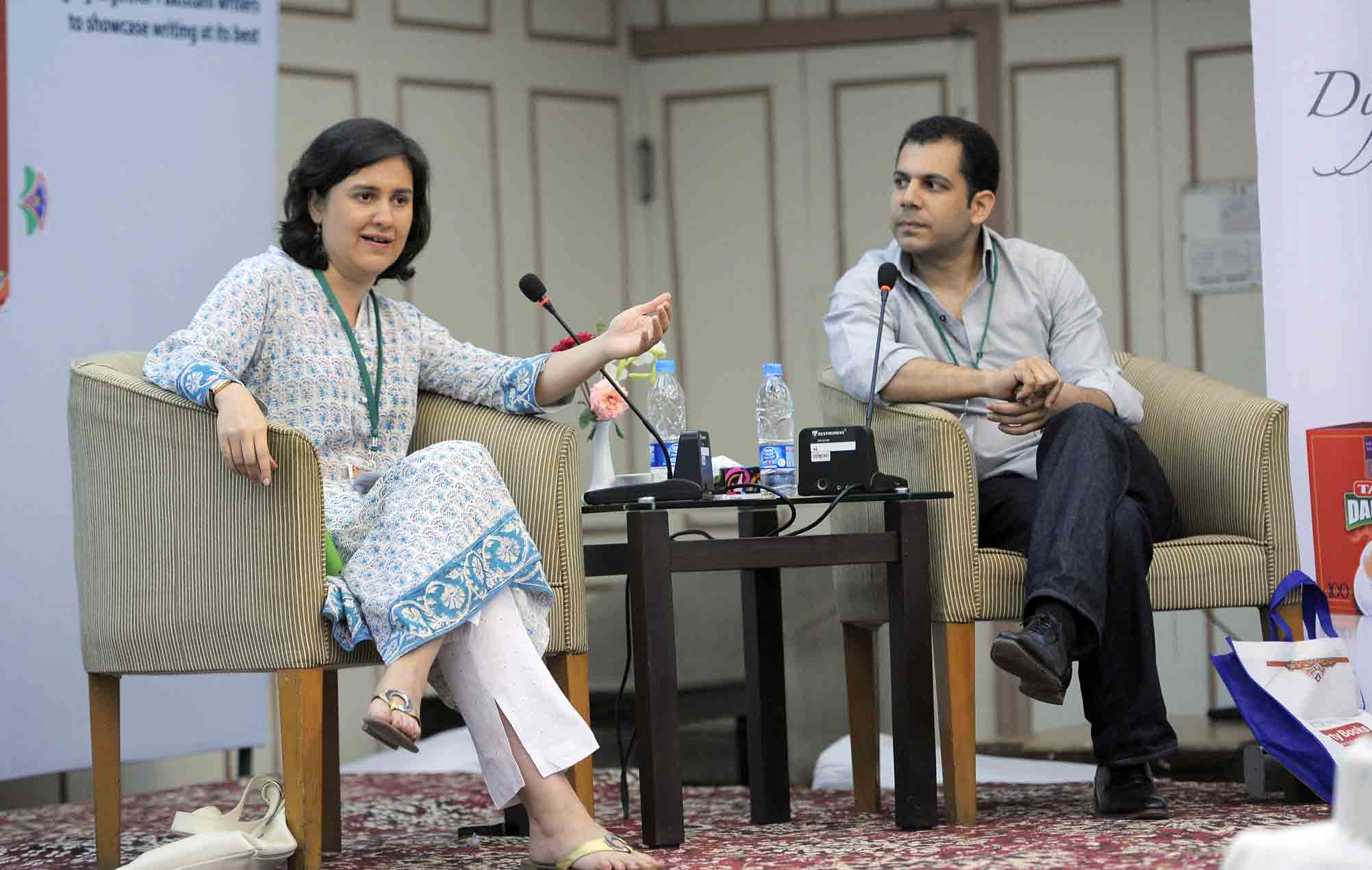
Fellow keynote speaker, Kamila Shamsie, commented on the beauty of Husain’s multi-ethnic characters, who allow their individuality to expand their imagination rather than create rifts and differences.
Shamsie began her keynote speech with the big question of how Pakistan should interpret its history, speaking also of Pakistan’s denied histories, in stark comparison to the farcical textbooks circulated in its schools.
True to the form of a story-teller, Shamsie told an interesting tale 2,500 years old — one she had recently discovered while researching her new book — the story of Skylax of Kariander (515 BC), a real life person as well as a character in her forthcoming book. Skylax was entrusted by his king Darius the Great to explore the Indus and its tributaries in order to provide navigation for Darius’ future campaign for conquest.
Upon reaching here he was flabbergasted by the intolerable heat and wrote of natives that had ears so large, they billowed, and feet such that would provide shade when held up against the sun, all to protect them from the weather. Being a famous man of his times, it was this idea of our region’s populace that the Greeks and Persians believed for years, until Alexander the Great made his way east. To this she added, “Nothing gets Pakistanis more worked up than foreigners misrepresenting them and it seems the process started a long time ago.”
Shamsie has recently been declared one of Granta’s 20 best young British writers under 40 — a recognition that is announced once every decade. Granta intends for the selected writers to attend literary festivals the world over, and Shamsie acknowledged that the fact that this festival was the first of them, held special meaning for her.
Shamsie was a part of two sessions, one with Ameena Sayid and Asif Farrukhi about the Granta list and the other a conversation with writer Shehryar Fazli. She spoke extensively on the art of the novel and her technique in particular. She called the novel an intimate, time-consuming effort with its particular pressures: “The novel works by way of cumulative effect,” she said. “It’s not a haiku, not a sonnet, not a short story that must hold the reader close in every sentence.” When asked about the ‘God complex’ imagined of authors with respect to their characters, she dismissed the idea, and stated feeling instead a sense of responsibility towards them, “to do right by them.”
Not prone to plotting the trajectories of her stories, she admitted she finds the beginning of a novel the most difficult part to write, and particularly relishes the last stages of editing, when one feels there is hope yet of fixing everything — an impossible concept, but an enjoyable one at that. Shamsie maintains that “it is important to listen to all the voices but it isn’t the job of the novel to be balanced.” It is meant to create an illusion, rather than record history: “to find the human quality at the heart of it.” A novel is about multiplicity and the writer must credibly write about and live in the minds of characters she might not agree with.
While Shamsie’s initial writings were based in Pakistan, in the city and neighbourhood she grew up in, now she wants to “use fiction as a means to enter time and space unknown, not write about what is familiar any more.” She conceded that moving away from Karachi has possibly contributed to this shift.
Her forthcoming novel is based in both Peshawar and Brighton, during the time of the British Raj. It begins with Skylax and ultimately follows the story of Qayyum, resident of modern day Khyber Pakhtunkhwa, who is enlisted in the Empire’s army and in the process loses an eye. He is sent to a makeshift hospital in the surreal Brighton Royal Pavilion where he forges a number of relationships with both fellow soldiers and foreigners before returning to Peshawar.
Peshawar caught Shamsie’s interest when there were regular bombings in the city. Feeling a sense of isolation from a city in her own country she began researching it. Living in London, she was lucky that the Empire had amassed comprehensive documentation of its conquests: “street by street views of major cities” (including Peshawar), are available to the public.
Shamsie is especially supportive of new writers and regularly interspersed her talks with advice and myth-busting regarding her craft. To the popular idea that artistic means an impractical way of life, she said, “I think its very impractical for a nation to crush creativity.” When asked about her favourite British authors she answered with David Mitchell, Nadeem Aslam and Ali Smith.