1
1
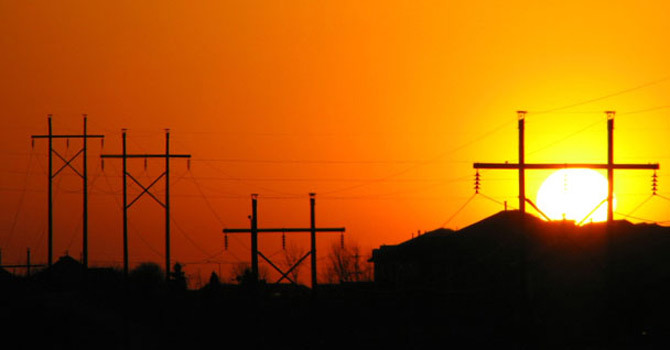

ISLAMABAD: An overarching verdict of the Supreme Court in the rental power projects (RPPs) case may become a test case for the PML-N government in waiting that has expressed its determination to end loadshedding.
Reeling under unbearable power cuts especially in sizzling heat, the people want immediate cessation of loadshedding, but the new government has to tread cautiously while ensuring transparency and clarity in every step it takes to improve electricity generation.
In prioritising initiatives for tackling loadshedding, the coming government not only has to take into account the March 30, 2012, verdict in the RPP case that virtually sealed the fate of the PPP administration, but also a suo motu notice taken by the Supreme Court oof then matter.
The shortfall of electricity stands at about 5,500MW out of a demand of 15,000MW. All the generating units are producing approximately 9,500MW.
In its last year’s verdict the court had held the RPP contracts as non-transparent and ordered that they be rescinded forthwith.
The National Accountability Bureau’s Chairman Fasih Bokhari was asked to proceed with corruption references against those who had been at the helm of affairs when the contracts were signed, between 2006 and 2008, to plug the energy shortfall through RPPs as a stopgap arrangement. Former prime minister Raja Parvez Ashraf was the minister for water and power during the period.
According to an expert, the RPP verdict had laid much emphasis on transparency issues, but had generally dealt with rental power production. Otherwise, there was a comprehensive system in place if the government intended to enhance the power generation capacity even if its preferred thermal power for the time being, he said, adding that the verdict posed no challenge to investment in the power sector.
The real roadblock or reason unnerving investors or shaking their confidence is the ever rising circular debt, which now stands at Rs500 billion.
And to check this monster, one-time money injection and prompt recovery of power dues from the provinces should be the prime emphasis of the new government, the expert said.
Senior counsel Khalid Anwar, when contacted, said there was no legal binding on the new government to take any necessary step for ending loadshedding.
Actually, the pressure because of the verdict was on NAB which had to collect concrete evidence for substantiating criminality against those involved in advancing mobilisation funds to the tune of 14 per cent of the project cost to the rental power producers instead of seven per cent, he said.
Barrister Zafarullah Khan of the PML-N highlighted the need of legislation to protect foreign investment by emphasising more on transparency in the bidding process and declassifying every document involved to build people’s confidence.
There were investment laws, he said, but they had been rendered rudimentary because of the changed circumstances and new legal initiatives were needed, especially to ensure fairness and openness in the appointment of the chief executive officers of the state entities like Wapda, Nepra, the NTDC and Pepco because the public departments were notorious for corruption.
Such steps would not only take care amicably of the judgments in the RPP case but also on the selection and appointment process in government departments, the lawyer said.
Tariq Mehmood, former chief of the Supreme Court Bar Association (SCBA), said that given the kind of relationship the country has with members of the Gulf Cooperation Council, it would not be difficult for the new government to ensure bulk supply of the much needed furnace oil for various independent power producers.
That might definitely help overcome or at least reduce loadshedding to a bearable level by enhancing electricity generation, especially for the time being when the capacity to meet the shortfall is available, he said.
During a recent hearing about loadshedding, the court was informed that Rs2bn a day was being spent to buy 25,000 tonnes of furnace oil daily for thermal electricity generation. This amount of around Rs749bn is in addition to Rs250bn the government has to incur on subsidy to certain consumers by selling electricity at less than the cost.