0
0
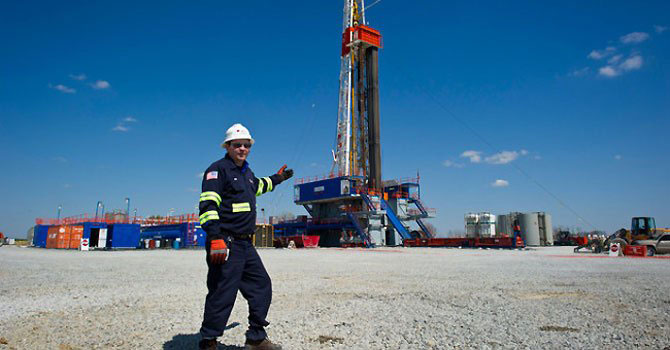

RIYADH: The ongoing revolution in the energy world is manifesting itself in more than one way.
Many in Washington – and all around –seriously think today that the much hyped upon energy independence is finally in grasp.
And as Saudi Arabia becomes less of an important supplier to the US, the world’s biggest oil consumer, some see the special relationship between the two as slowly crumbing. Steven Chu, former US energy Secretary, during a trip to Riyadh, almost at the beginning of his tenure, while conceding that the crude glue that kept Riyadh and Washington together was slowly peeling off, told this correspondent; yes, Riyadh and Washington now needed to develop new bondages.
“We are still partners but less intimate partners than we once were,” Chas Freeman, the former US ambassador to Saudi Arabia was quoted as saying.
The ongoing oil shockwaves were pushing Opec out of the groove of the global oil mover and shaker, says the IEA. “North America has set off a supply shock that is sending ripples throughout the world,” executive director, Maria van der Hoeven said.
“The good news is that this is helping to ease a market that was relatively tight for several years.”
Major oil producers are looking at the entire development from a softening market viewpoint too. And they are not rattled.
“This talk of ending US reliance on imports is naive and simplistic,” Saudi oil minister Ali Naimi said on April 30, while speaking at the Centre for Strategic and International Studies, in Washington.
More oil reserves, like those from the Bakken and Three Forks formations, will add stability to an increasingly global market, he noted.”
“Talk of energy independence fails to recognise the interconnected nature of global oil (and) global energy markets,” he said.
“We are all part of a global market, and no country is truly energy independent.”
Al-Naimi likened calls for US energy independence and the end of imports from the Middle East – and what is characterised as “energy isolationism” – to peak oil theory.
“Expert opinion a few years ago was that the world was running out of oil […] In 2009, I was here when peak oil was really at the peak.
‘Peak Oil is here,’ they said.
‘The age of oil is over,’ they said. I haven’t heard much from them lately.”
And minister Naimi had figures up his sleeves to underline.
Exports from Saudi Arabia were higher in 2012 than at any time since tight oil production began in 2009.
And even though US oil imports fell to 8.5 million barrels a day last year - the lowest level since 1997 - imports from Saudi Arabia and Canada actually grew.
The increase in Saudi and Canadian imports highlights some crucial points: Not all crudes are created equal, and US refinery demand varies depending on their qualities, such as density and sulfur content.
Over the past several years, many refiners invested heavily in the equipment and upgrades necessary to process heavy crudes at their plants.
So because they don’t want to let their upgraded facilities sit idle, Saudi and Canadian oil remains in high demand.
Khalid Al-Falih, the Saudi Aramco CEO too welcomed the boom in US shale production underlining it would reassure consumers about the reliability of oil supplies.
The shale revolution had helped ease fears about excessive reliance on the Middle East, and encouraged governments to be more “pragmatic and rational” about energy policy, he told the Financial Times.
In the long term, Al-Falih also believed that the rising US production would not take away its market.
“Oil is going to be the fuel of choice, in terms of its overall performance, for an extended period of time, and we need to manage it, we need to invest in it.”
Despite strong headwinds, Saudi oil Czars are putting up a brave, smiling face, apparently on a public relations spree.