0
0
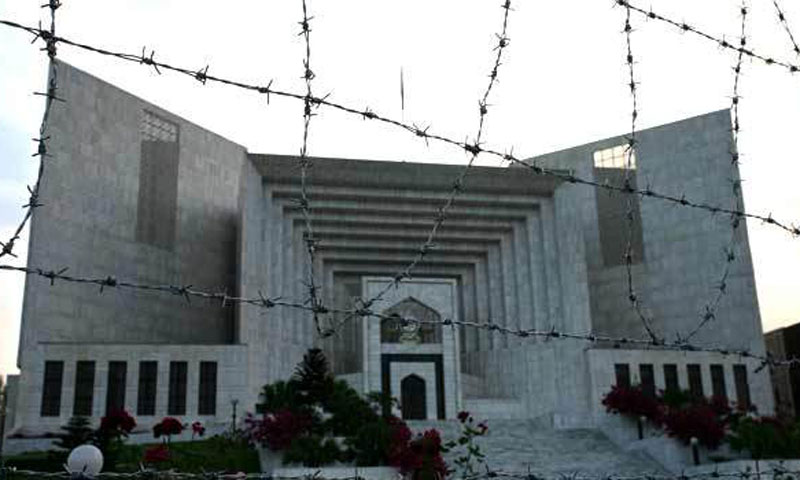

ISLAMABAD: The heads of electricity distribution companies (Discos) told the Supreme Court on Saturday that the problem of enforced and prolonged outages caused by tripping of Guddu, Uch, Foundation and Habibullah Coastal power plants had almost been solved.
They submitted a joint statement to the court in compliance with its directive to the managing director of the National Transmission and Dispatch Company (NTDC), Zargham Ishaq Khan, to hold a video conference with the MDs of the Discos, chairman of the Indus River System Authority (Irsa) and secretary of water and power ministry to ensure implementation of its order of May 21 that had called for equitable distribution of power among all categories of consumers.
The statement said the chief executive officers of the Discos — Lesco, Fesco, Iesco, Mepco, Pesco, Sepco, Hesco and Qesco — had held the video conference on Saturday. It was chaired by caretaker Water and Power Minister Dr Mussadiq Malik and attended by Mr Khan, Irsa chairman Asjid Imtiaz and other officials.
The joint statement said that currently the total output of the power plants stood at about 12,500MW and added that only three independent power producers with a total capacity of 600MW (Halmore, Liberty and Hubco Narowal) were out of the national grid because of different reasons.
Adequate supply of furnace oil and gas to the powerhouses was being ensured to maintain the output and bridge the gap between demand and supply, it said.
About generation from Wapda’s hydropower stations, it said the situation has started improving due to rising water flows in Indus and Jhelum rivers and a significant increase in releases from Tarbela and Mangla reservoirs.
From May 21 to 30, it said, the share of hydropower plants in the total output had increased by 425MW, from 4,674MW to 5,099MW. The situation would improve further in June, July and August when the hydel stations would be operating at their full capacity of 6,733MW. The statement said the heads of the Discos had directed their subordinates to carry out fair, just and equitable loadshedding irrespective of the status of consumers and improve monitoring of the distribution system. It assured the court that its order would be strictly implemented.
A technical expert, Mohammad Raziuddin, claimed that Guddu Thermal Power Plant’s unit number 11 of 135MW and unit number 13 of 140MW had been dysfunctional for years because they lacked ‘turbine blades’. He proposed punitive action against the officials responsible for the ‘criminal negligence’.
About unit number 7 of the plant, he said the MD of the NTDC had told the court that its torque converter had been replaced even though the part, which must be imported, had yet to reach the country. The 100MW unit had been dysfunctional for the last one year for want of the converter.
Moreover, unit number 12 of the plant was running on an ‘open-cycle generation system’, which was a fairly inefficient way of running it, Mr Raziuddin said.
He said that $1.7 billion had been invested on the Guddu plant and it was supposed to generate 1,650MW. However, the plant was contributing only 775MW to the national grid, which was less than half its designed capacity.
Mr Raziuddin said that power plants in other countries usually ran at full capacity. If a plant had a designed capacity of 200MW, it was actually capable of producing 210MW or more during its first 10 years. The capacity declined slowly over the life of the plant but not below 190MW by the end of it, he explained.
But in Guddu, he said, the capacity of some units had decreased by 50 per cent, an ‘impossible’ engineering phenomenon not acceptable under any standards.