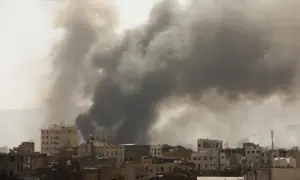
BAGHDAD: The worst violence since 2008 hit Iraq in May, raising fears of all-out sectarian strife, as political leaders were to meet on Saturday for talks on persistent disputes that have paralysed the government.
Authorities have failed to bring the wave of unrest under control, and have so far not addressed the underlying political issues that analysts say are driving the attacks, while the UN envoy to Iraq has warned that the violence is “ready to explode”.
Figures for the May death toll ranged from more than 600, according to the government, to more than 1,000, according to the United Nations, either of which would make the violence the deadliest since 2008.
An AFP count based on information from security and medical sources indicated that 614 people were killed and 1,550 wounded, while data from government ministries put the toll at 681 dead and 1,097 wounded. The UN gave a significantly higher toll of 1,045 killed and 2,397 wounded.
The figures were released ahead of a meeting of leading politicians including Prime Minister Nuri al-Maliki and several of his key rivals planned for later Saturday.
The long-discussed meeting is aimed at resolving a wide variety of disputes between the country's political blocs, some of which have persisted for several years. Analysts often link political instability to increases in attacks.
UN envoy Martin Kobler warned on Thursday that “systemic violence is ready to explode at any moment” if Iraqi leaders do not resolve their disagreements.
But so far, all efforts to bridge their differences have failed.
While violence has mainly targeted the government and members of the Shiite majority in the past, unrest in May was more wide-ranging, with major attacks on Sunnis as well.
The violence has struck all aspects of daily life.
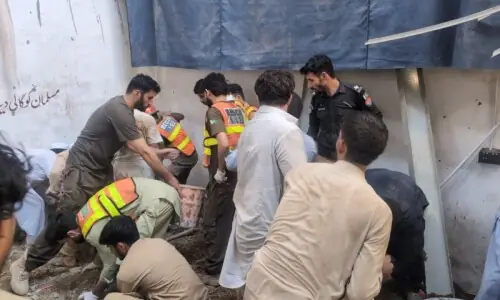
Bombings cut down worshippers in mosques, shoppers in markets and people mourning those killed in attacks. One Baghdad car bomb even tore through a group of people cheering a bride ahead of her wedding.
Although violence in Iraq has fallen from its peak at the height of the sectarian conflict in 2006 and 2007, when the monthly death toll repeatedly topped 1,000, the numbers of dead have begun to rise again. There has been a heightened level of violence since the beginning of the year, coinciding with rising discontent in the Sunni Arab minority that erupted into protests in late December.
Members of the minority, which ruled Iraq from its establishment after World War I until Saddam Hussein's overthrow by US-led forces in 2003, accuse the Shiite-led government of marginalising and targeting their community.
Analysts say government policies that have disenfranchised Sunnis have given militant groups both fuel and room to manoeuvre among the disillusioned community.
The government has made some concessions aimed at placating protesters and Sunnis in general, such as freeing prisoners and raising the salaries of Sunni anti-Al-Qaeda fighters, but underlying issues have yet to be addressed.
Both analysts and officials say that dealing with political issues, including Sunni grievances and disputes over issues ranging from control of territory to power-sharing, is key to curbing the violence.
“The government should genuinely (take) steps toward the negotiation with the street, with the (Sunni) protesters,” said Maria Fantappie, an Iraq analyst with the International Crisis Group.
“So far, the government has not taken any genuine steps towards really... engaging into a dialogue with the protesters,” she said.
John Drake, an Iraq specialist with risk consulting firm AKE Group, agreed.
“Engagement and dialogue would likely be the most effective way to tackle the violence. An increase in security force operations and arrests will only provoke the situation further,” Drake said.
But Iraqi authorities are approaching the unrest as a security issue alone, and have failed to address its root causes.
So far, Baghdad's response has largely been limited to actions by security forces, a shakeup of senior officers, and announcing a series of vague new security-related measures.