0
0
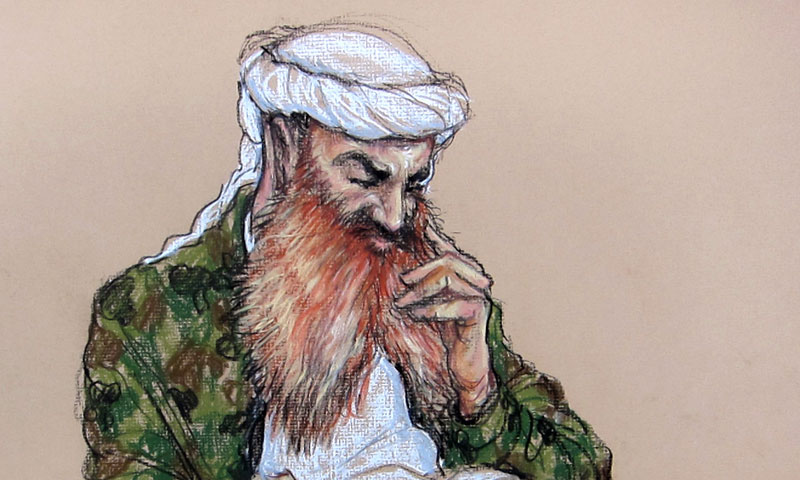

FORT MEADE, Maryland: The men accused of plotting the September 11, 2001 attacks returned Friday to a military court in Guantanamo Bay, Cuba, although their trial may still be more than a year away.
The preliminary hearing, focused on rules over monitoring interactions between attorneys and their clients, marked the first time the five had been in court since February.
The co-defendants sat calmly with none of the outbursts that marked previous sessions.
Self-proclaimed 9/11 mastermind Khalid Sheikh Mohammed wore a camouflage jacket and white turban, with his thick beard died a reddish orange.
Journalists and relatives of the victims heard the court room exchanges, with a 40-second delay, in an adjoining gallery and at the Fort Meade base in Maryland, which received a feed.
Two former New York policemen who were injured in the attacks also attended the hearing.
The preliminary hearings, set to last through Friday, come amid a widespread hunger strike that has lasted more than four months by nearly two thirds of the 166 terror suspects still held at Guantanamo.
A total of 104 detainees are now refusing food, with 44 of them being force-fed through a nasal tube into the esophagus, according to prison spokesman Lieutenant Colonel Samuel House.
It is unclear whether the accused plotters are participating in the strike, and they did not appear thinner at the hearing.
Defence lawyer Commander Walter Ruiz earlier told AFP his client Mustafa al-Hawsawi had at one point refused food in solidarity with his fellow prisoners.
Defence attorneys questioned retired vice admiral Bruce MacDonald, who previously oversaw the special military tribunals, about rules he approved allowing prison officials to listen in on client-attorney meetings.
MacDonald, speaking via teleconference from the northwestern US state of Washington, said he had asked to record and tap all telephone conversations between the five men and their lawyers.
All declarations by the five men, considered “high-value” detainees who face the death penalty” are considered classified because they were held at secret CIA sites before being transferred to Guantanamo.
Mohammed was subjected to 183 sessions of waterboarding, or simulated drowning, at the black sites.
“Waterboarding is torture,” MacDonald said when asked about the so-called enhanced interrogation technique.
The defence lawyers also highlighted MacDonald's lack of experience with capital punishment cases, and criticized him for only giving them two months to build their case ahead of the first preliminary hearing in May 2012.
MacDonald defended the delay as “sufficient.”The lawyers are demanding that prosecutors abandon the charges due to “unlawful command influence.”The five defendants' trial is not set to begin until late 2014.