9
9

ABOUT six years ago the Cutty Sark — a 19th century historical British clipper ship — caught fire near the National Maritime Museum in Greenwich, London, and burned for several hours until the fire brigade finally extinguished the flames.
All that remained was less than half of the original structure: fragments of wood, fabric and rope: the reduced ship was dead. Or so we thought.
With the aid of external funding, a team of skilled conservator-restorers began to work on repairing the ship, ultimately finishing the project within a couple of years. A previously ruined piece of national history had been incredibly returned to its former glory.
In Balochistan, the Ziarat Residency was where Jinnah spent the last days of his life, a beautiful building soaked in decades upon decades of history, this estate was declared a national monument and heritage site.
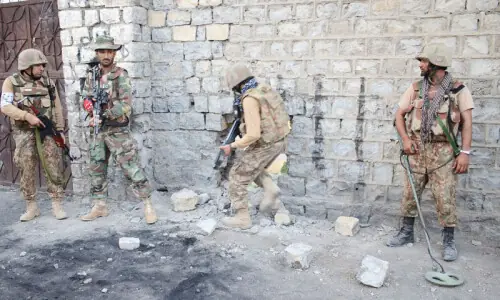
Like the Cutty Sark, the Ziarat Residency was made almost entirely of wood; its fragile structure and susceptibility to fires proved fatal when the ‘Balochistan Liberation Army’ used explosives to devastate Jinnah’s historic home.
Onlookers watched as the gorgeous building went down in flames, taking its history with it. The BLA does not realise that by destroying this monument, they have inflicted a wound upon Pakistan and, therefore, themselves: this act of destruction will certainly not bring about anything useful and has heartbreakingly led to the loss of a grand historic structure.
However, I believe that all wounds are healable no matter what the size or severity.
When the British Cutty Sark was destroyed, the general public were convinced that the ship was a lost cause; it appeared well beyond repair.
In spite of this, the ship was successfully restored. The Ziarat Residency, though currently in a bleak state, can absolutely be refurbished to the pinnacle of preservation. This task shall require the abilities of specialist conservator-restorers who will need to be supported by government funding.
The importance of the restorers’ expertise is colossal, considering the enormity of the venture; regular government contractors will not be appropriate for this scheme. Though difficult in the beginning and fairly time-consuming, this project will bring the Ziarat Residency back to life, standing stronger than ever.
Certain national groups and organisations (such as the ‘Aga Khan Trust for Culture’ which have taken part in many previous projects, such as the restoration of Baltit Fort, Hunza) should supervise the restoration mission, making sure that things are done correctly and accurately.
The Ziarat Residency will rise from its ashes, shining brighter than ever, proving that history never dies.
ISMAIL JAN London